Switzerland is regarded as the ‘world champion of recycling’ – or so the myth goes. A detailed analysis reveals a more nuanced picture: in some areas, Switzerland is indeed a global leader, whilst in others it lags surprisingly far behind. The SATW’s Technology Outlook takes a close look at the current state of affairs and introduces the people and companies shaping the future of recycling.
Nowhere is the Swiss paradox more evident than in the case of plastic. When it comes to PET recycling, Switzerland leads the world with a material recovery rate of 82 per cent. Across all plastics, however, the picture is sobering: Of the approximately 830,000 tonnes of plastic waste generated annually, the majority is simply incinerated. Only around 72,000 tonnes are actually recycled – a rate of 9 per cent, which places Switzerland far behind in international comparisons.
The problem is less a lack of will than a lack of infrastructure: there are no national recycling systems for plastics such as polyethylene or polypropylene, and mixed collections have to be transported abroad for sorting. Yet the effort would be well worth it. Recycled materials massively reduce the carbon footprint of plastic across its entire life cycle, and every kilogramme of recycled material saves around three litres of crude oil.
The good news is that innovations from Switzerland could turn the tide. AI-supported infrared sorting promises significantly more precise separation of mixed plastics (see, for example, Müller Recycling ), and the Valais-based start-up Depoly has developed a chemical process that breaks plastics down into their basic molecular building blocks – even mixed waste can thus be processed into products as good as new. A first demonstration plant is being built in Monthey for this purpose.
Far less widely recognised by the public, but at least as strategically important, is the recycling of phosphorus. This plant nutrient is essential for our diet, and Switzerland is currently entirely dependent on imports, mostly from mines in Morocco, China or Russia, where mining has a negative impact on the environment and public health. At the same time, every year we literally flush thousands of tonnes of phosphorus down the toilet or dispose of it with slaughterhouse waste.
Since 2026, Switzerland has had a legal requirement to recover phosphorus from sewage sludge and animal meal. Large-scale plants are being planned or built in Bazenheid, Zuchwil and Oftringen. In parallel, researchers are pursuing a second, decentralised approach: urine separation. Eawag has calculated that separating just one-fifth of the urine produced could replace around 15 per cent of mineral fertiliser imports. The liquid fertiliser Aurin, produced from urine – the world’s first approved fertiliser of its kind, developed in Switzerland – proves that this works. The showcase ‘Collecting nutrients instead of flushing them away’ demonstrates what such nutrient cycles look like in practice .
Electric mobility is booming. What happens to the batteries when they are no longer fit for driving? Even with a remaining capacity of 80 per cent, they are considered inadequate and are replaced; according to estimates, only 5 to 15 per cent of all batteries worldwide are recycled correctly. Yet they still contain plenty of power.
A Swiss solution to this problem comes from Brunnen on Lake Lucerne. The founders of Modual realised that the remaining capacity of end-of-life vehicle batteries is more than sufficient for stationary energy storage and began experimenting in their basement in 2020 – using batteries from Kyburz Switzerland’s three-wheeled post delivery vehicles. Today, the company has installed several hundred systems across Switzerland, all manufactured at its headquarters, with capacities ranging from 11.5 to 368 kilowatt-hours. Proprietary software periodically puts the cells through a ‘wellness programme’ to optimise their remaining service life. Next on the agenda are large-scale storage systems from 500 kilowatt-hours upwards, which, when combined to form virtual power stations, could help maintain grid stability.
The Bern University of Applied Sciences is taking an even earlier approach: using a fleet of 200 e-bikes from the manufacturer Thömus , it is investigating which conditions cause batteries to age more quickly. This research is a key prerequisite for reliable predictions of remaining service life and, consequently, for business models centred on second-life applications. The work is part of the Innosuisse project CircuBAT. The showcase on dismantling batteries using AI-assisted robotics demonstrates how the cycle is ultimately closed.
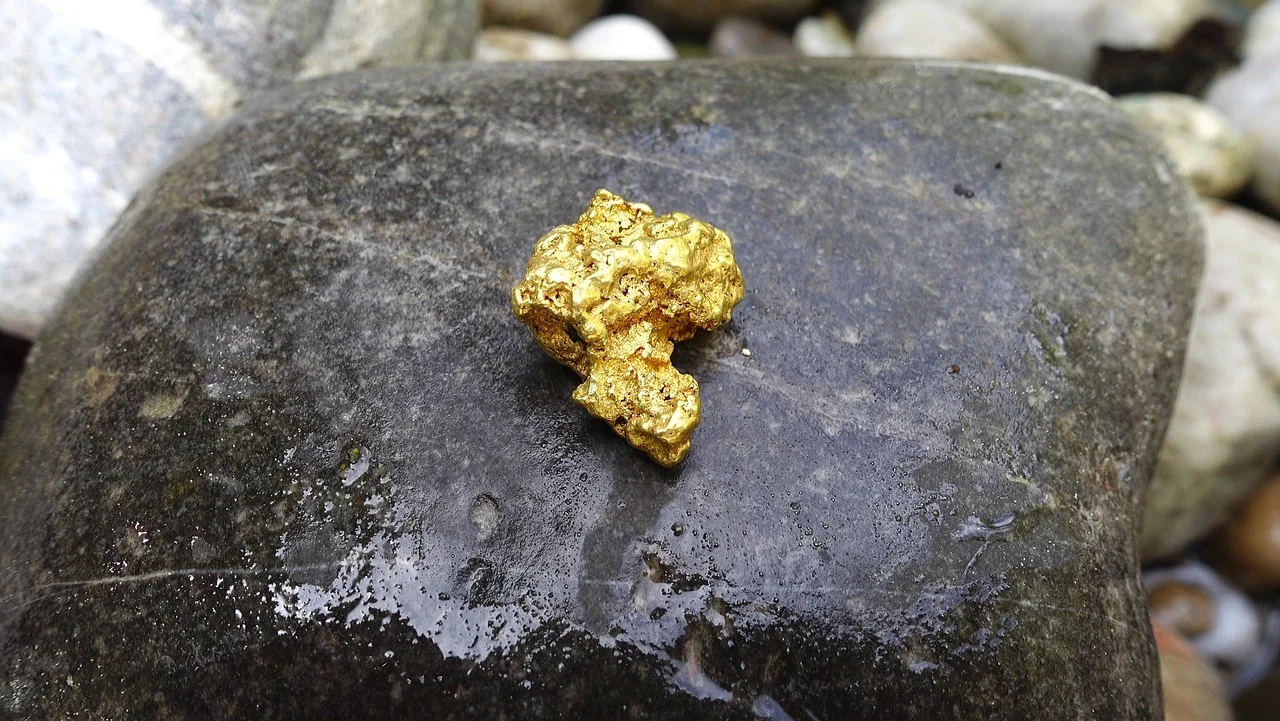
Research at ETH Zurich demonstrates that waste can literally be worth its weight in gold. Electronic waste contains gold in concentrations a hundred times higher than those found in gold mines. Nevertheless, only a fraction of this is recovered globally. Professor Raffaele Mezzenga’s team has found a solution that is as elegant as it is surprising: whey, a by-product of cheese production. Using the whey proteins, the researchers produce highly porous sponges that bind gold ions from dissolved electronic waste with astonishing selectivity. From 20 old computer motherboards, they produced a 450-milligram gold nugget with a purity of 22 carats: two waste streams have been transformed into valuable precious metal. The showcase ‘Extracting Gold from Electronic Waste’ demonstrates how industry is tackling this issue .
Equally forward-looking is the work of Marie Perrin, who, during her PhD at ETH Zurich, developed a process to recover europium – a rare-earth metal – from old fluorescent tubes. This is a hot topic: rare earths are found in virtually every electronic device, yet around 70 per cent of them come from Chinese mines. To date, less than one per cent of these have been recycled. Perrin’s method separates europium with far greater precision than previous processes. With her spin-off, REEcover, the multi-award-winning researcher is now working on scaling up the process – a Swiss contribution to a goal that the EU has also set itself: greater independence in critical raw materials.
A look at the Technology Outlook shows that Switzerland has the knowledge, the companies and the inventive spirit to transform waste streams into sources of raw materials. What is needed now is the right infrastructure, sensible regulatory frameworks and the realisation that recycling is far more than just collecting bottles – it is a key technology for security of supply, climate protection and domestic value creation.
Neugierig geworden? Der Technology Outlook der SATW bietet fundierte Einblicke in diese und viele weitere Technologien und Showcases – recherchiert mit Expert:innen aus Hochschulen und Industrie:
| Role | Title + Name |
|---|---|
| Text by | Esther Lombardini |
| Expertise | Christian Holzner, Stefan Scheidegger, Claudia Schärer |