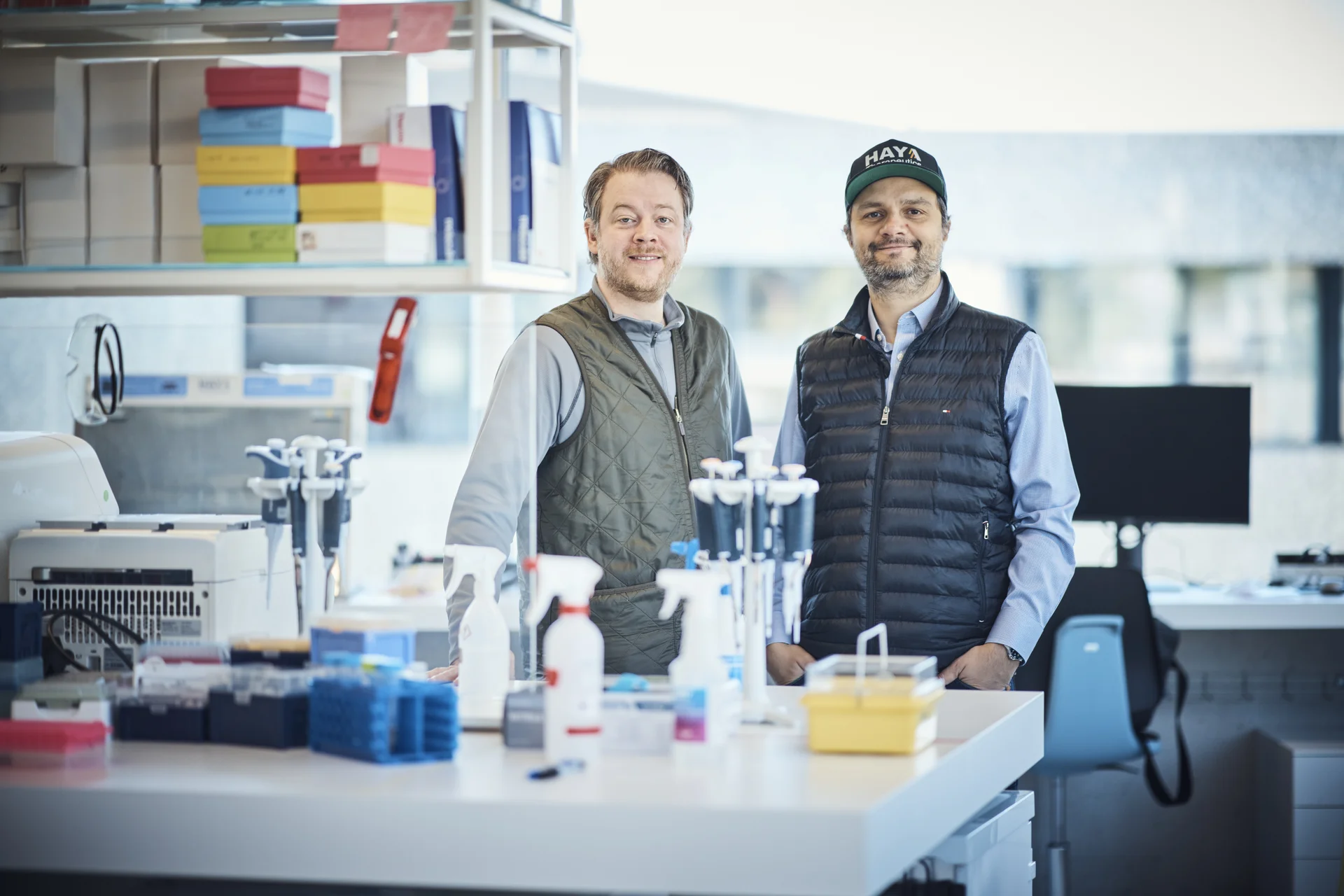
When the Technology Outlook presented HAYA Therapeutics and its work on the dark genome in 2025, the company’s drug candidate HTX-001 had shown promising results in preclinical models. Less than a year later, on 20 May 2026, the company announced that the first cohort of healthy volunteers had been fully enrolled and dosed in a Phase 1a/b clinical trial. HTX-001 is a first-in-class antisense oligonucleotide designed to downregulate WISPER, a long non-coding RNA (lncRNA) that drives fibrosis in the heart. The trial will evaluate safety, tolerability, pharmacokinetics and pharmacodynamics in healthy volunteers and patients with nonobstructive hypertrophic cardiomyopathy (nHCM), a condition for which no treatment currently addresses the underlying fibrotic process.
In the same month, IDEA Pharma recognised HAYA as a “Disruptive Pioneer” in its 2026 Global Pharmaceutical Innovation and Invention Index – an annual ranking that benchmarks the world’s leading pharmaceutical companies on their ability to generate and translate new ideas into value. HAYA’s inclusion reflects the growing recognition of regulatory-genome science as a new therapeutic paradigm with applications beyond cardiac fibrosis, including oncology and obesity, the latter supported by a collaboration with Eli Lilly and Company announced in 2024.
Both milestones illustrate a core objective of the Technology Outlook: to identify technologies and applications at an early stage that have the potential to shape the Swiss economy and society. The trajectory of HAYA Therapeutics – from academic discovery at the CHUV in Lausanne, through a USD 65 million Series A financing round in 2025, to clinical development and international industry recognition in 2026 – demonstrates how Switzerland’s life sciences ecosystem can translate fundamental research into globally competitive innovation.
Read the full Technology Outlook showcase: "The cryptic messages of our genome"
| Role | Title + Name |
|---|---|
| Text by | Esther Lombardini |