Translated by an automated translation plugin.
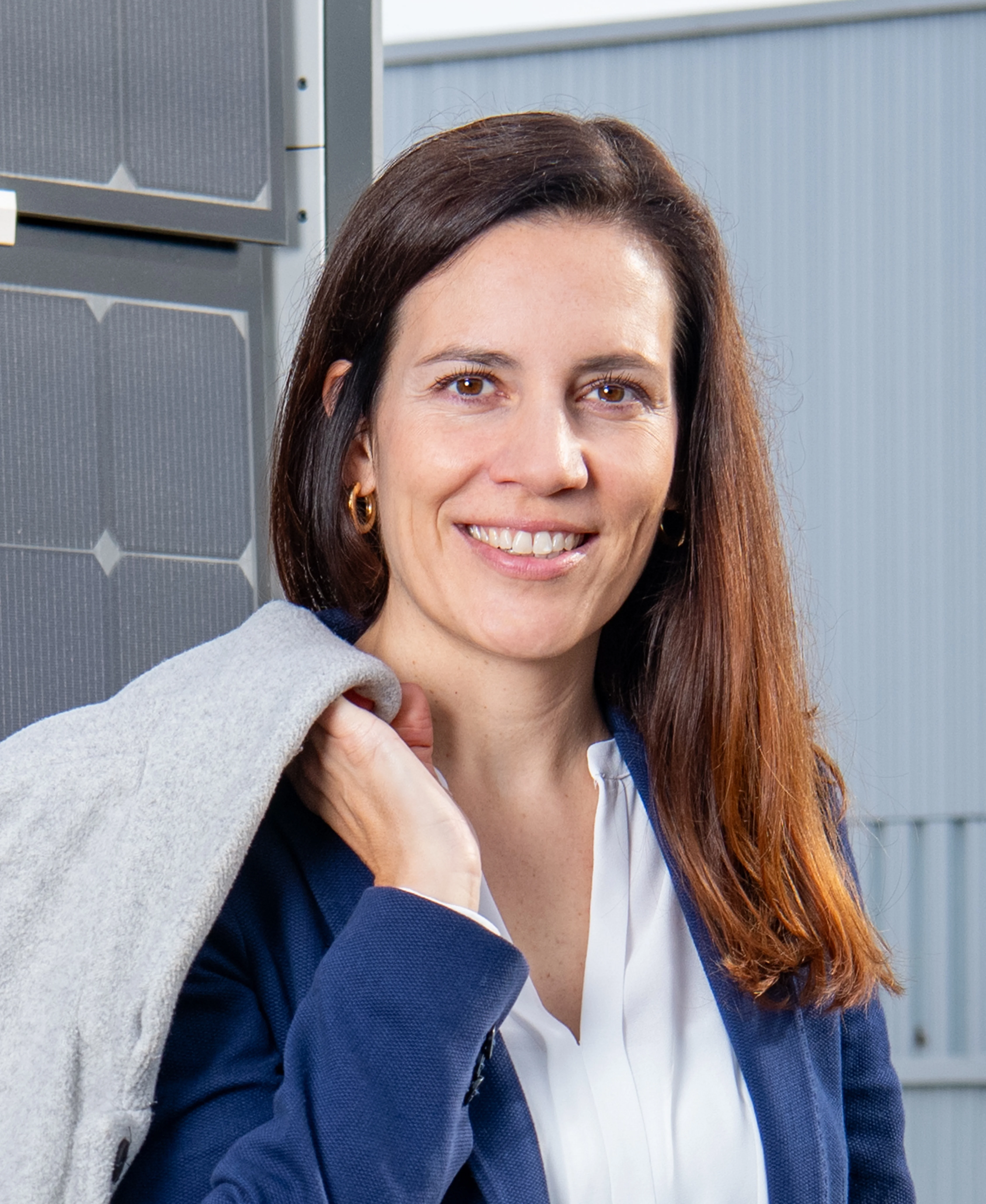
A recent report by Axpo raises an uncomfortable question: Where will the electricity come from if the Swiss nuclear power plants are taken off the grid in the next few years, winter consumption increases due to heat pumps and electromobility and the expansion of renewable energies falters? Fifty Axpo experts, supported by scientists from ETH Zurich and the Paul Scherrer Institute, have developed two scenarios: either an increased expansion of wind and solar energy supplemented by gas-fired power plants or the abandonment of nuclear power combined with new reactor units. Dr Nathalie Casas, Head of the Department of Energy, Mobility and Environment at Empa and new member of SATW, analyses the results from a research perspective.
Ms Casas, the Axpo report paints a serious picture: without new measures, Switzerland faces an electricity shortfall in winter with consequences for the economy and society. Do you share this assessment?
Yes, absolutely. In view of the ongoing electrification of heating and mobility as well as population growth, the demand for electricity will increase significantly in the future. The study shows various scenarios that could lead to this goal. I was less surprised by the technical analysis than by the assessment of the social acceptance of the various technologies. This is not an exact science, and I would perhaps have presented it slightly differently in some respects. However, my assessment would not be fundamentally different.
The report compares wind energy and gas-fired power plants on the one hand and new nuclear power plants on the other as the two main scenarios. Is there a scenario that is clearly more convincing? And should other technology areas be discussed?
The study presents two main scenarios, but there are other realistic combinations, for example renewable energies combined with an extension of the operating life of existing nuclear power plants, which the study also analyses. There is no one scenario that clearly outweighs the others. They all have their challenges.
From a purely technological point of view, a stronger expansion of wind energy would be a very elegant solution, as wind is mainly produced in winter and is comparatively cost-efficient. However, the challenges are clearly on the social side. However, what I would say is fundamentally clear: We need to expand, no matter which technologies. Without a general expansion, we will very soon face major challenges in terms of energy supply.
With regard to gas-fired power plants, the study primarily analyses their use withoutCO2 capture, which, as expected, has a negative impact on the emissions balance. As these power plants are primarily intended for short-term and temporary use and there are still some unanswered questions regardingCO2 capture, even if the technology is largely mature, I believe it would be important for such plants to be built "capture-ready" from the outset. This would allow capture to be retrofitted as soon as the framework conditions are right.
On the question of whether other technologies should be discussed: Geothermal energy and heat storage already play an important role today, especially in the local building sector. At Empa, together with Eawag, we are investigating an underground heat storage facility in order to better understand what exactly happens underground and whether existing regulations need to be adapted to further promote this technology.
The report openly criticises rooftop photovoltaics: too expensive, not relevant enough in winter, hidden subsidies. Is this correct from your research perspective or does this assessment fall short?
The economic analysis of the study is factually correct: rooftop PV supplies little electricity in the critical meteorological winter and the subsidy requirement per MWh of winter electricity is higher than for other technologies. However, not all externalities, such as risks, are priced in for certain technologies. In addition, economic efficiency is not the only criterion when it comes to energy supply.
Many people are prepared to pay a premium if it means they can gain a certain degree of energy independence and take control of their own energy supply. This aspect of self-determination and social commitment is real and should not be underestimated. This independence can be increased even further with battery storage systems, which are also becoming increasingly cheaper. Another important advantage of rooftop PV is its agility: you can act quickly and flexibly, which is not the case with other technologies with long authorisation and construction processes.
You have been working onCO₂capture technologies at Climeworks for years. The Axpo report barely mentions such solutions. What role could technologies such as direct air capture or synthetic fuels play in improving the carbon footprint of gas-fired power plants?
Direct air capture is and will always remain an expensive technology. This is due to thermodynamic reasons: the separation ofCO2 from a very diluted system inevitably requires a lot of energy. This is not a question of technological maturity, but a fundamental physical principle.
DAC will be needed, but it should be used specifically where no other solution is available, for so-called hard-to-abate emissions, i.e. emissions that cannot be mitigated in any other way. The same applies to renewable fuels: they should be used where electrification is not possible, for example in aviation or in certain industrial processes.
DAC would therefore not be the first choice for gas-fired power plants that are built as a short-term interim solution. It would make much more sense to build these plants "capture-ready" from the outset so that they can be retrofitted as soon as the framework conditions are right.
Under the label "Mining the Atmosphere", Empa is conducting research into not only storingCO₂, but also utilising it as a raw material. How far away is this vision from becoming industrially relevant?
The vision of not just storingCO2 but utilising it as a raw material is very promising. But you have to look at the entire cycle and focus on those applications where it actually makes ecological and economic sense. An important factor here is that these processes are often very energy-intensive and should therefore be used specifically where they really add value.
At Empa, we are conducting research in precisely this area and trying to understand which cycles can be used sensibly in the future. The potential is real, but it needs time and a stable regulatory framework.
The report states that technology alone is not enough. There is a lack of authorisation procedures, regulation and financing models. What do politicians need to do now to ensure that Switzerland does not fall into the supply trap? Would you prioritise different approaches to action than Axpo?
I think Axpo's approaches are basically good. But what I would like to add as a key social message is that there is no one scenario that stands out in a positive light. All technologies have their challenges. And that is precisely why it is so important to understand this: If you say "no" to technology A, you have to say "yes" to technology B. Otherwise there is no room for solutions in the future.
Society and politicians must be aware of this consequence. You can't say no to everything and expect a secure, affordable and low-emission energy supply at the same time. However, there are also no-regret decisions, i.e. measures that make sense in every scenario and should be taken in any case: for example, the expansion of photovoltaics and wind energy, the promotion of electromobility and the use of heat pumps.
You believe that technology alone cannot stop climate change. What else is needed? And how can an institution like the SATW make a meaningful contribution?
Technology alone cannot stop climate change. It needs social acceptance, political will and, above all, an honest, fact-based discussion. This is precisely where the SATW can play an important role: as a neutral knowledge broker that presents and discusses facts without representing particular interests or beliefs. In today's world, where debates about energy and climate are often very polarised, this is particularly valuable.
The SATW can help to better dovetail science, industry and politics by creating a space in which complex technological issues can be discussed objectively and without ideological views.
Which steps in Swiss energy policy do you consider to be the most urgent?
As a society, we must now invest quickly and carefully in the energy system of the future. This requires three things at the same time: an informed society, a policy that sets the right course and an industry with access to the latest research and development. In this context, facts and an open discourse are particularly important at the moment.
Dr Nathalie Casas studied chemical engineering and completed her doctorate at ETH Zurich. After years as Application Manager at Sulzer Chemtech, she joined Climeworks - the ETH spin-off for Direct Air Capture - in 2017, where she was Head of Development & Engineering and Head of Technology. Since October 2023, she has headed the Department of Energy, Mobility and Environment at Empa. She is a member of the Innosuisse Innovation Council.
in 2026, she was accepted as a new member of the SATW network - in recognition of her outstanding contributions to the development of innovative technologies and energy systems to reduce greenhouse gas emissions and her commitment to the implementation of scientific findings in industry and society.
| Role | Title + Name |
|---|---|
| Text by | Esther Lombardini |
| Expertise | Nathalie Casas |