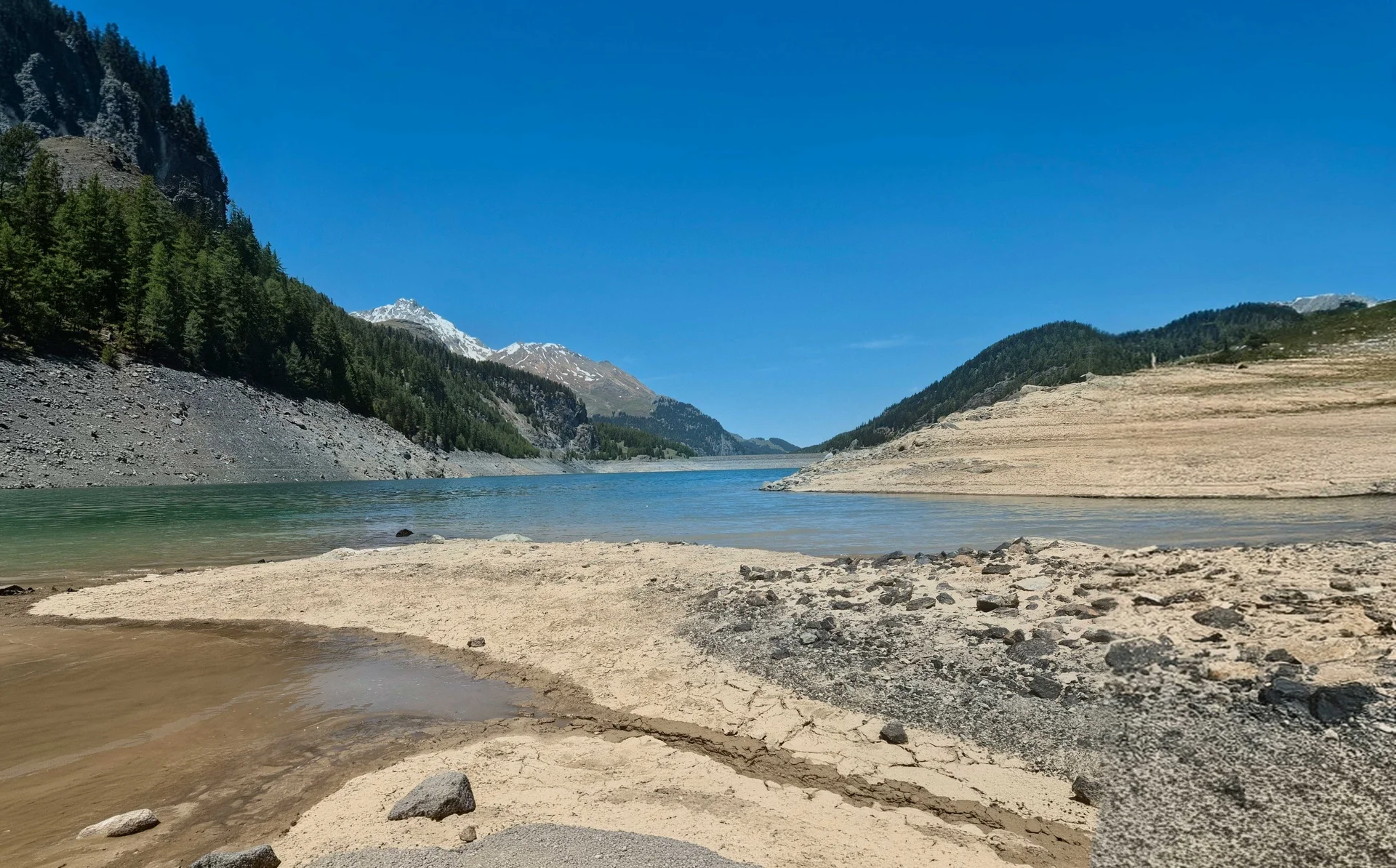
Heat and drought had a direct impact on electricity generation: Beznau was forced to reduce output from June onwards and, at times, shut down completely, whilst run-of-river power stations produced significantly less electricity.
Photovoltaics, meltwater and cross-border trade helped to offset the shortfalls. Switzerland got off lightly – thanks to diversified generation and flexible integration into the European electricity market.
The demand for cooling is rising: many households purchased inefficient portable air-conditioners. Shading, night-time cooling and heat pumps with seasonal storage are the more sustainable alternatives.
The after-effects are being felt into the winter: reservoir levels have been below the ten-year low since July, and low water levels on the Rhine have made fuel transport more expensive. The supply is currently considered secure.
Summers like this could become the norm by the end of the century. The measures needed to improve resilience are well known and must now be implemented consistently – the Energy Outlook 2060 will not be available until the end of 2027.
The heatwaves this summer posed an immediate threat to human health. Vulnerable groups such as the elderly, young children and those with health conditions suffered particularly from the high temperatures and warm nights. As the heat and drought persisted, water temperatures also rose, with streams and rivers experiencing low water levels or drying up altogether. This endangered fish populations and other aquatic life, and also restricted commercial shipping on the Rhine. Farmers complained of a shortage of feed for livestock and crop failures. Furthermore, the drought increased the risk of forest fires, which is why a nationwide ban on lighting fires was imposed at the end of July.
Less immediately noticeable to the general public, but equally significant, were the effects on the energy supply. The Beznau nuclear power station had to reduce the output of both reactors from June onwards due to the high temperature of the water in the River Aare and, as temperatures continued to rise in June, July and August, had to temporarily shut down one or both units completely. Run-of-river power stations on the rivers are also generating significantly less electricity due to the drought. By contrast, the summer weather, with its many hours of sunshine, was very favourable for solar power generation. As there has been a massive expansion of solar installations in recent years, these were able to make a substantial contribution to the electricity supply, as demonstrated, for example, by Swiss Radio and Television and the Tages-Anzeiger have reported.
The heatwave has also led politicians to call for the simplified installation of air-conditioning systems as an adaptation measure. By international standards, few buildings in Switzerland are currently fitted with air-conditioning. However, many private households have purchased portable air-conditioners this summer, which are often not very energy-efficient. Researchers at the Swiss Federal Laboratories for Materials Testing and Research (Empa) have estimatedthat, in an extreme scenario involving significant global warming, high population growth and the widespread introduction of air-conditioning in Swiss households, energy demand could rise considerably by 2050. A news article from ETH Zurich points out, however, that there are various other, more sustainable solutions for maintaining a comfortable indoor climate. For example, in our climate, improved shading, night-time cooling and simple fans can also help create a more pleasant indoor environment. And in new buildings, efficient heat pump systems can store heat underground in summer and use it again for heating in winter. In particular, for vulnerable groups such as children and the elderly, as well as in hospitals, it is likely that permanently installed, efficient air-conditioning systems will need to be fitted.
Christian Schaffner, energy expert and member of the Scientific Advisory Board at SATW, assesses the impact of the hot summer on the energy supply in a short interview with SATW.
SATW: In your view, what are the most significant lessons from this summer for Switzerland’s energy supply, particularly with regard to electricity generation and demand? What could be improved in the short term?
Christian Schaffner: In the SPEED2ZERO project at ETH Zurich, together with various research partners, we investigated how global warming might affect the energy supply. What became clear is that the likelihood of severe droughts is increasing – as, incidentally, is that of very wet years. This summer was certainly a foretaste of what may yet lie ahead. Ultimately, we got off relatively lightly when it came to the electricity supply, thanks to two factors: photovoltaic systems supplied a great deal of electricity, and hydropower was still able to generate electricity ‘thanks’ to meltwater from the glaciers. We also had a high volume of electricity exchange with other countries. It is clear that diversified electricity generation, combined with a flexible connection to the European electricity market, is definitely a positive factor.
Due to the lack of rainfall since last winter, the water levels in Switzerland’s reservoirs are very low, as shown by the Energy Dashboard of the Swiss Federal Office of Energy (SFOE) shows. Since July, these levels have been well below the minimum recorded over the last ten years, and it is unclear to what extent water reserves for electricity generation will recover by winter. Energy imports are also being affected by the drought. Low water levels on the Rhine have restricted the transport of petroleum products by tanker, which has led to significantly increased the price of petrol at petrol stations. However, the relevant federal authorities currently regard the supply as secure. Because the only Swiss refinery, in Cressier, had to temporarily halt production at the start of September due to a technical fault, the Federal Office for National Economic Supply has authorised withdrawals from the compulsory mineral oil reserves, limited in both time and quantity, so that supplies can be maintained should temporary shortages arise.
SATW: How significant do you consider the after-effects of the hot summer to be for security of supply? Are other factors, such as the tense geopolitical situation and its impact on energy supply chains, more significant?
Christian Schaffner: We are increasingly living in a time of diverse challenges: electricity supply in winter and during periods of drought, and the supply of fossil fuels during geopolitical crises. Given the current geopolitical situation, high prices for oil, natural gas and petrol this winter are not unlikely. The steps needed to make the system more resilient in the short to medium term are well known: rapid electrification of the heating and transport sectors, and the expansion of domestic electricity generation as quickly as possible, particularly through photovoltaics and, hopefully, wind and hydro power too. To achieve this, we must provide flexibility, whether through batteries, pumped-storage facilities or the smart operation of heat pumps and charging stations – and, of course, not least through efficient connection to the European electricity grid. The electricity grids must also be expanded and, above all, operated more intelligently, and we will likely also need to build up reserve capacity in the electricity supply.
According to Meteo Switzerland, a summer like the one we just experienced could become the norm by the end of the centuryif the emission reduction measures currently planned are implemented and global warming progresses accordingly. Even if climate change can be stabilised at a lower level, measures to adapt to future heatwaves and droughts are essential. The Federal Government has set mid-2025 as the deadline for drawing up the Energy Perspectives 2060 , which will form an important basis for shaping medium- and long-term energy and climate policy. However, the results of this work will not be available until the end of 2027.
SATW: How should extreme heatwaves and droughts be taken into account in the Energy Perspectives? Are additional studies and measures needed to prepare Switzerland’s energy supply for future hot summers?
Christian Schaffner: It is now important to assess the findings already available and carry out the necessary risk assessments so that we can decide quickly where measures make sense, even in the short term. There is certainly still work to be done regarding climate adaptation in the energy supply sector. Unfortunately, time is running out somewhat.
Much has already been put forward and simply needs to be implemented. It remains to be seen what additional solutions are needed to ensure the system can cope with recurring periods of heat and drought. We should answer this question now – not only when the next such summer arrives.
Christian Schaffner has been Director of the Energy Science Centre (ESC) at ETH Zurich since 2013. This interdisciplinary centre of excellence promotes energy research and education at ETH Zurich, bringing together over fifty professorships from nine departments with industry, government and society. Previously, he headed the Networks Section at the Swiss Federal Office of Energy, where he was responsible for the electricity grid strategy and the smart grid roadmap; he was also involved in the bilateral negotiations between Switzerland and the EU on an electricity agreement. Christian Schaffner is a member of the SATW’s Scientific Advisory Board.
| Role | Title + Name |
|---|---|
| Text by | Christian Holzner |
| Expertise | Christian Schaffner |