Translated by an automated translation plugin.
Mr Schneider, the international AI summit on artificial intelligence will take place in Switzerland next year. What does this mean in concrete terms for our country and why is it more than just a PR event?
Switzerland is pursuing several goals with the summit: It wants to make a constructive contribution to the development of appropriate international AI governance and, in doing so, strengthen Geneva's role as an important centre for multidisciplinary international cooperation in this field. At the same time, Switzerland wants to use the summit to present itself to the world as an innovative centre for research and business in the field of AI and to empower stakeholders in its own country in dealing with AI.
You have spent years negotiating AI regulations in the international arena - from the Council of Europe Convention to UN bodies. To what extent can Switzerland, as the host of this summit, play its role as a neutral mediator between the major blocs of the USA, EU and China?
We will endeavour to achieve concrete and sustainable results with our summit. As a small country, we cannot impose ideas and solutions on the other countries, but can only achieve them together with the others. We will concentrate on topics where we see the chance of achieving the broadest possible consensus. In doing so, we will benefit from our reputation for treating all stakeholders fairly and respectfully and attaching great importance to inclusive processes that lend legitimacy to the results.
In an article in "Die Volkswirtschaft", you described how the global debate on the regulation of AI has changed rapidly since US President Donald Trump took office - away from risk avoidance and towards an investment race. How is Switzerland positioning itself in this changed environment?
The geopolitical situation had already changed before the change of government in the US. Developments have become more complex and are pulling in different directions at the same time. For Switzerland as a small country with an open economy and society, the further development of a values- and rules-based world and economic order remains essential. We must take geopolitical developments into account and find new convincing arguments as to why it is better for everyone to abide by certain rules of the game.
You say that regulation can promote innovation because it creates clear conditions. However, many companies in Switzerland tend to experience this the other way round, namely as a brake. How do you convince sceptical business representatives of this connection?
Certain rules are needed for markets to function. Companies and investors need stable and reliable framework conditions. They also need the trust of consumers and society that damage and negative effects will be limited. The art of smart regulation is to use the simplest and least bureaucratic means possible to set incentives in such a way that science and research can be innovative while maintaining a sufficiently high level of trust in business and politics.
Switzerland has opted for an approach to AI regulation that favours sectoral solutions where possible, while the EU is taking a horizontal approach with the AI Act. What opportunities and risks does this special Swiss approach harbour - especially in view of the international summit?
The Swiss approach states that necessary legislative adjustments should be as sector-specific as possible. General, cross-sector regulation should be limited to central areas relevant to fundamental rights. Switzerland has thus opted for a balanced regulatory approach or a middle way. International interoperability is also established via the Council of Europe Convention. The AI summit in Geneva will be an opportunity to present the Swiss approach and contribute to the global discussion on AI governance.
The Federal Council intends to ratify the Council of Europe Convention and prepare a consultation draft by the end of 2026. What does this mean in concrete terms for companies and research institutions in Switzerland? What do they need to know now?
The consultation draft will focus in particular on the public sector. However, where the protection of fundamental rights requires it, there will also be specific legally binding measures for private players, for example in the area of transparency. The Federal Office of Justice is currently working out the details. OFCOM is also coordinating the development of legally non-binding measures together with the private sector, for example industry solutions and codes of conduct. We regularly provide information and discuss the status of the work via the Plateforme Tripartite Suisse. I invite all interested parties to take part in the dialogue - just send an email to ir(at)bakom.admin.ch.
You mentioned that we are "using 19th century tools to solve 21st century problems". How do you think international AI governance needs to fundamentally change? And can a summit like next year's in Switzerland be a catalyst for this?
The national political milieus of entrepreneurs, employees, Christian conservatives and farmers that emerged with industrialisation and the formation of nation states are less and less reflective of today's much more volatile, differentiated and globalised living environments. And legislative procedures have become too slow for technological developments. Our democracies must therefore find new ways - possibly with the help of AI - to better ensure the representation of a dynamically changing population structure, including across national borders, and to guarantee a more agile adaptation of our regulations to new phenomena.
What concrete results should emerge from the 2027 AI Summit in Switzerland for it to be a success for you?
The summit will be a success for us if we have achieved the goals mentioned at the beginning. However, it's not just about the interests of people and companies in Switzerland, but AI should also help to improve the quality of life of as many people in the world as possible, not make it worse - and that the environment is protected and not further polluted. We already have concrete ideas that we will develop further with our national and international partners. Because, as I said, as a small country we can only achieve our international goals together with other partners.
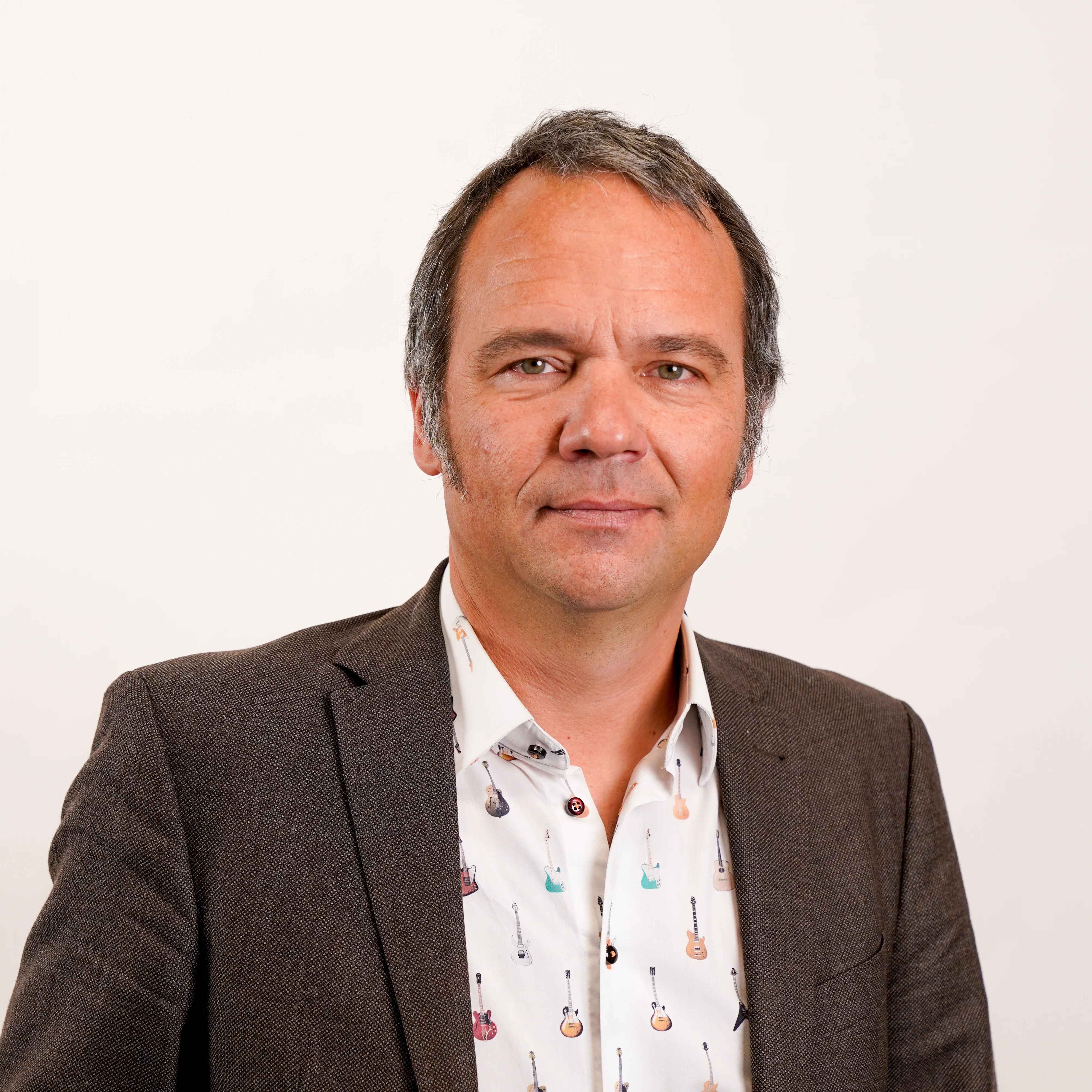
Thomas Schneider, Ambassador and Vice Director of OFCOM, is a member of the SATW working group "AI Law and Technology". As former Chairman of the Council of Europe Committee on AI and an experienced international negotiator, he brings unique practical knowledge to the work of the SATW.
The Swiss Academy of Engineering Sciences SATW actively accompanies the development of artificial intelligence in Switzerland: it publishes analyses and recommendations for business, politics and research - for example on the legal framework for AI or the use of AI in SMEs. With the SAIROP platform, SATW also promotes the transfer of knowledge between research, industry and administration.
| Role | Title + Name |
|---|---|
| Text by | Esther Lombardini |
| Expertise | Thomas Schneider |