As the most important network of experts for the engineering sciences in Switzerland, our goal is to further enhance Switzerland’s leading position in this field, and to help ensure that findings are translated into technologies and innovations for the benefit of the economy and society.
Translated with DeepL
There will be more space stations in the future. We must therefore expect more soot and rocket debris in space. How do you assess the risks here?
Due to the commercialisation of access to space, traffic in low Earth orbit (LEO) is becoming increasingly dense. Knowing that more than two thirds are Starlink satellites from SpaceX, and there will be even more with the ongoing Amazon Leo programme, which plans about 3000 satellites to start with. The situation is definitely not environmentally friendly, and all these satellites will also be scrap in the future.
What will happen if we don't take countermeasures?
If we don't develop new technologies to capture junk now, a "Kessler syndrome" could lead to an uncontrolled state. This risk also increases exponentially if we continue to shoot up such numbers of satellites. This is a cascade effect of collisions triggered by a single uncontrolled collision - and could make space virtually unusable.
Are there concrete figures on space debris?
Yes, and they are alarming. There are over 40,000 pieces that can be tracked - old satellite parts, old launch vehicle parts and so on. In addition, there are over 1.2 million parts that are larger than 1 centimetre - 50,000 of which are even larger than 10 centimetres - and cannot be controlled or tracked.
The satellites fly at around 27,000 km/h in low earth orbit - even the smallest parts under 1 centimetre can become projectiles. At these speeds, even a tiny piece of scrap becomes a serious threat.
How long do these objects stay in space?
Nowadays, satellites in low Earth orbit have a requirement to make a controlled departure from orbit within five years. They are either manoeuvred into the Earth's atmosphere to burn up or are decommissioned in a so-called "graveyard orbit". If the satellites have no active control to remove them from their orbit, it can take up to 25 years for them to burn up.
What is Switzerland doing about space debris?
Switzerland is a pioneer in this area. The Lausanne-based start-up ClearSpace has developed a satellite that approaches larger, trackable pieces of scrap, captures them with a robotic system and steers them into the atmosphere in a controlled manner, where they burn up. Technologically fascinating, but currently not economically viable, as one satellite is needed to capture another.
ESA, on the other hand, is working with its Clean Space Group to promote such technologies and raise awareness of the need for international regulation and continuous monitoring. The ESA also publishes an annual space environment report with detailed information.
How must satellites develop in the future?
There is an urgent need for more intelligent satellites. In order to cope with heavy traffic without collisions, satellites will need automated control directly on board in future so that they can react more quickly without first sending signals to earth and uploading commands. At speeds of 27,000 km/h, every second counts. Added to this is the increasing light pollution of the night sky due to satellite light reflection and signal interference. There are global UN guidelines in the area of "Dark and Quiet Skies" to curb this. For example, with darker colour coatings and communication control to enable our astronomers to continue long-term observations (e.g. deep sky).
These satellites are both a blessing and a curse. How do we solve this?
This is indeed a dilemma. Today's satellites enable a continuous communication and internet network that serves both the consumer society and the economy. In addition, it is central to earth observation in order to observe, analyse and understand weather and climate processes as well as changes and to issue alerts at an early stage. This is a real benefit for society.
The geostationary satellites at an altitude of 36,000 kilometres - known as GEO - are used for navigation and localisation on Earth with constellations such as GPS, GLONASS, Beidou or Galileo. Today, these services are essential for our modern society.
But the consequences of climate change are no longer just terrestrial. They also affect space, and vice versa, space has an impact on our climate. We need to keep both in mind and act responsibly.
What do we need for the future?
We definitely need more international cooperation and regulation. ESA is doing important pioneering work here, but ultimately space is a global common good. Only if all nations and all private stakeholders work together can we get to grips with the problem of space debris.
With innovations such as ClearSpace and the wooden satellites, Switzerland shows that small countries with good ideas and technologies can play an important role. But we need global standards, continuous monitoring and the willingness of everyone involved to take responsibility.
However, we must also bear in mind that space technology usually has a dual-use application. It can be used for both civilian and military applications. This is why independent geopolitical access to space is so important for Europe and Switzerland. Equally fundamental is the sovereignty over the data, the resilience of the systems and the knowledge of who, what, when and where is flying over Switzerland. This allows us to get a complete picture of the security of our society.
Read part 1 of the interview series here: "New Space" - The new era of space exploration
| Role | Title + Name |
|---|---|
| Text by | Esther Lombardini |
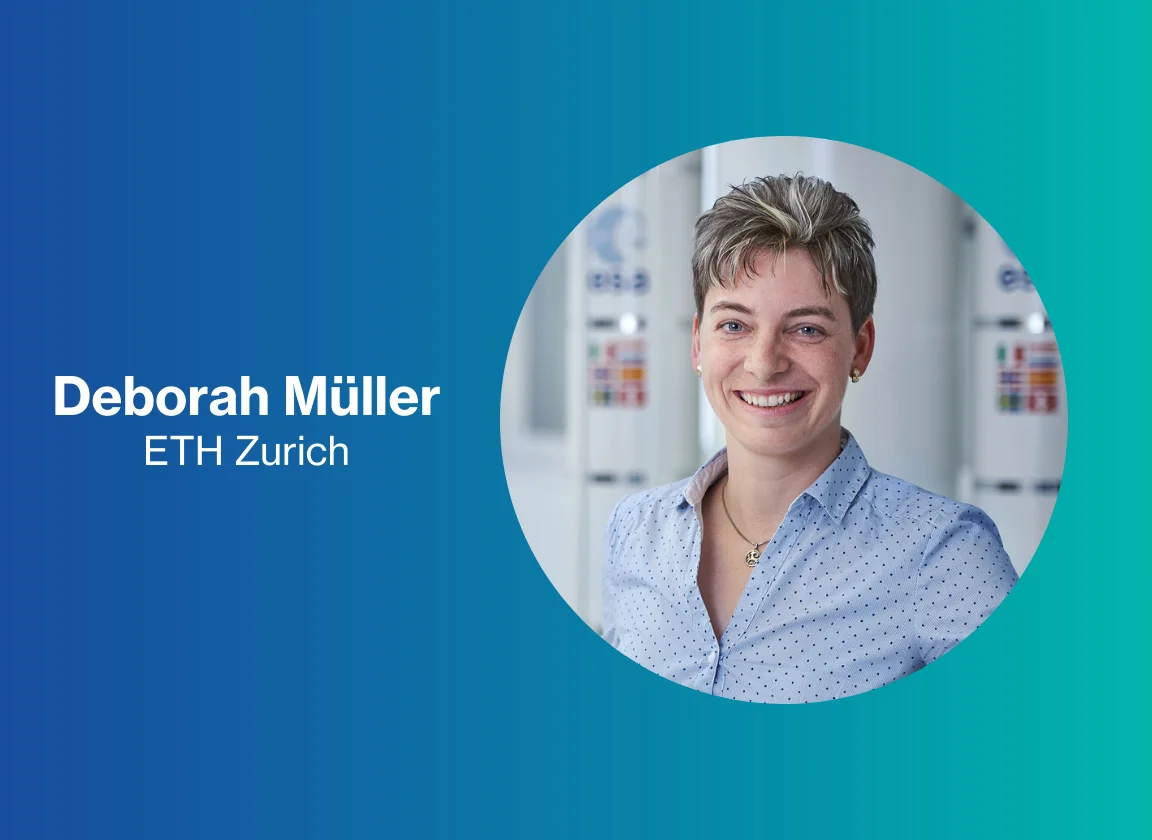
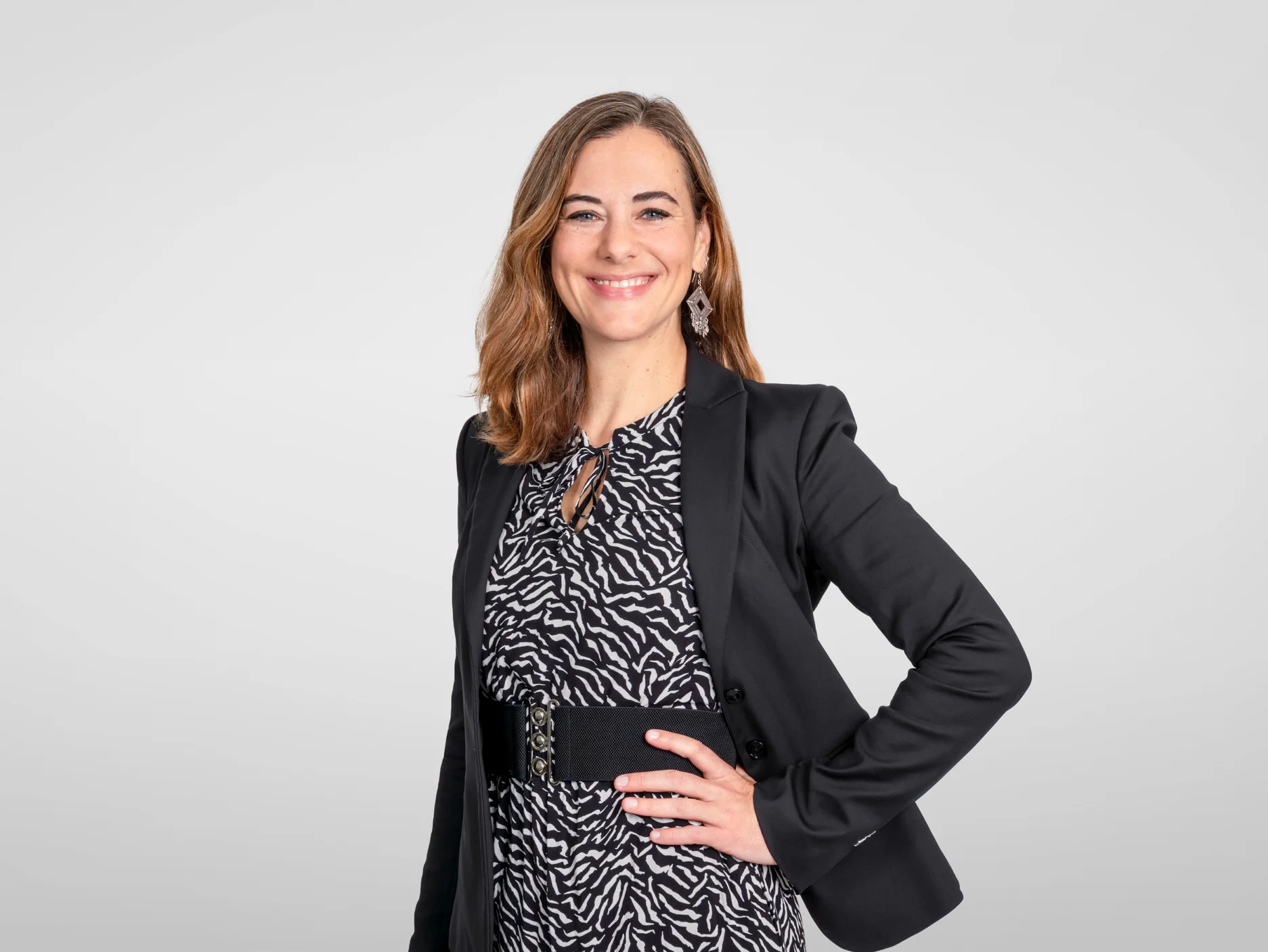
| Expertise | Deborah Müller |
Esther Lombardini
Committees: Employee
Organization: Swiss Academy of Engineering Sciences SATW
Function: Editor and PR Manager
Website: www.satw.ch
Role: Author | News | 17-09-26
Since April 2026, Dr Barbara Frei-Spreiter has been at the helm of Beyond Gravity, the largest Swiss aerospace supplier operating internationally, with 12 sites across six countries. She is taking the helm of this federally-owned company at a time of two major turning points: in 2025, Parliament decided to retain control with the federal government; space has been Switzerland’s official military domain of operations since October 2025; and, following a year of losses, the group is in the midst of a turnaround. In an interview with the SATW, Beyond Gravity’s new CEO explains why dependence is Switzerland’s greatest vulnerability, where she draws the line between commercial business and security considerations, and why a country without its own rocket can still be a leading player in the space sector.
Role: Editor | News | 17-08-26
AI models can increasingly be deployed directly on end devices and are no longer reliant on cloud computing power. These so-called edge AI models also have an impact on cyber security. To ensure that Switzerland does not miss out on developments in this area and can deploy edge AI in a secure and trustworthy manner, the new SATW factsheet sets out specific courses of action.
Role: Editor | News | 27-05-26
Digital services are only used if they are considered trustworthy. Although Switzerland took an important step with the narrow acceptance of the e-ID in September 2025, the result also shows that the population's trust in digital solutions cannot be taken for granted. The new SATW factsheet sets out where the biggest gaps are and what measures the federal government, cantons and institutions should take now to make digital trust a reality in Switzerland.
Role: Author | News | 26-08-26
Eleonore Poli, an engineer and materials scientist based in Neuchâtel, is investigating how space technologies can be utilised on Earth, whilst simultaneously preparing for her own spaceflight. As an analogue astronaut, she has already completed several simulation missions under extreme conditions. Alongside her research, she volunteers as a mentor with Swiss TecLadies, the SATW’s national programme for promoting young talent, which encourages young women to pursue careers in mathematics, engineering, natural sciences and technology (STEM). In this interview, she talks about her visions for the future of space travel and explains why role models are so important for younger generations.
Role: Author | News | 03-09-26
Astrophysicist Kathrin Altwegg has analysed the chemical composition of a comet using the ROSINA mass spectrometer in Bern and discovered the building blocks of life. In the SRF summer series ‘25 Years of Tagesgespräch’, she caused a stir in July 2026 with her pointed remarks: She questions the scientific value of manned spaceflight, warns of deadly space debris from 2032 onwards, and is convinced that the likelihood of life in space is high. For her, life on Earth and extraterrestrial life are of equal value. In an interview with the SATW, the professor emerita sets out her theories and explains the significance artificial intelligence will have for space research in the future.
Role: Author | News | 10-09-26
Four telescopes that must maintain a stable focus on extremely faint galaxies for an exceptionally long time, and detectors that remain at a constant temperature of around –130 degrees Celsius throughout: the ARRAKIHS space telescope has been built to the very limits of what is technically possible. In June 2026, the European Space Agency (ESA) gave the go-ahead for the mission – with a Swiss contribution for which Florian Kehl was responsible until the end of 2025. To ensure that such contributions do not remain isolated cases, in addition to high-quality research, we need structures, streamlined processes and people who can get entire missions off the ground. This is precisely what Kehl is working on today as Director of Space Research Initiatives at ETH Zurich | Space. In an interview with SATW, he explains what makes ARRAKIHS so technically challenging, just how competitive Switzerland really is when it comes to securing leadership roles in European missions, and why, in his view, the search for extraterrestrial life might be on the verge of yielding an answer.
Role: Author | News | 20-01-26
The International Space Station (ISS) has shaped space exploration for decades. But its time is running out: it is due to be brought down in a controlled manner in 2030. What comes after that? In this two-part interview series, we talk to SATW expert Deborah Müller about the future of space travel. The first part deals with the major transition from a state-dominated space programme to commercial space travel, the economic opportunities and sustainable innovations such as satellites made of wood.
Role: Author | News | 20-01-26
The commercialisation of space travel opens up new opportunities - but also harbours considerable risks. In this two-part interview series, SATW expert Deborah Müller talks about the future of space travel. The second part deals with the growing threat of space debris, the so-called Kessler syndrome and the innovative solutions that Swiss start-ups are developing.
Role: Author | News | 10-08-26
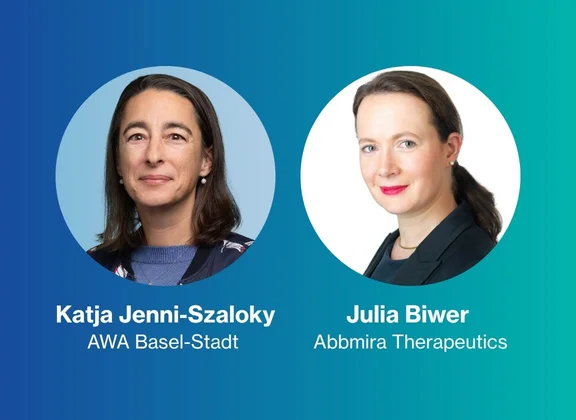
Pharmaceutical innovation rarely arises in the laboratory alone – it requires an entire network. The SATW has interviewed two experts and, in this article, highlights different perspectives on the Swiss life sciences ecosystem: Katja Jenni-Szaloky from the Office for Economic Affairs and Labour in Basel-Stadt describes how the canton creates the right framework conditions; and Julia Biwer, COO and co-founder of Abbmira Therapeutics, explains how a young Basel-based biotech start-up operates within this ecosystem and where it encounters its limitations.
Role: Author | News | 05-08-26
Gold from old computers, fertiliser from wastewater, batteries with a second life: the SATW’s Technology Outlook highlights where Switzerland stands today in terms of recycling and which innovations from universities and industry are paving the way towards a genuine circular economy.
Role: Author | News | 24-08-26
A biotech company without a laboratory? What sounds like a contradiction is, for Abbmira Therapeutics, the smartest business model. The Basel-based start-up is developing a drug to treat cancer and relies entirely on external experts from the Basel life sciences cluster. In an interview with the SATW, Julia Biwer, COO and co-founder, discusses why this model works, why venture capital is hard to come by in Switzerland, and what this reveals about Switzerland’s culture of innovation.
Role: Author | News | 07-07-26
Two new studies paint a consistent picture: the Haufe Academy’s Trend Radar 2026 outlines the skills required in the workplace of tomorrow. The Swiss STEM Youth Barometer 2026, published by the Swiss Academies of Arts and Sciences, shows where these skills are being developed – or, indeed, where they are not. A comparison of the two reports makes it clear why promoting STEM is not just an educational issue, but also an economic necessity.
Role: Author | News | 03-06-26
Switzerland is faced with an urgent question: where will the electricity come from in winter if nuclear power plants are taken off the grid and consumption increases due to heat pumps and electromobility? A recent report by Axpo paints a serious picture and outlines two possible scenarios. Wind and gas or new nuclear power plants. In an interview with SATW, Dr Nathalie Casas, Head of the Department of Energy, Mobility and Environment at Empa and new member of SATW, analyses the findings. She concludes: "All technologies have their challenges. If you decide against one technology, you have to decide in favour of another.
Role: Author | News | 08-06-26
The adoption of the e-ID was a milestone - but the close vote showed that digital trust cannot be taken for granted in Switzerland. How is it possible to establish a coherent, trustworthy digital administration in a federal system with 26 cantons and thousands of municipalities? Marcel Kessler, Head of Architecture and Standardisation at the Digital Administration Switzerland (DVS), provides an insight into the strategy, the specific measures and the challenges on the way to an interoperable trust infrastructure.
Role: Author | News | 22-05-26
The Lausanne-based company HAYA Therapeutics, featured in the Technology Outlook showcase “The cryptic messages of our genome”, has reached two significant milestones in quick succession: the first cohort of participants has been dosed in a Phase 1 clinical trial of its lead candidate HTX-001, and the company has been named a “Disruptive Pioneer” in the 2026 Global Pharmaceutical Innovation and Invention Index published by IDEA Pharma. These developments underscore the relevance of the technology identified by SATW’s foresight activities.
Role: Author | News | 11-02-26
Every two years, SATW's Technology Outlook presents future technologies that will shape the Swiss economy and society. In the current issue, two showcases in the field of energy and the environment document how researchers and companies are extracting gold from waste streams - in an environmentally friendly, innovative and economical way. From whey proteins to bacterial solutions: These articles show how waste is being turned into valuable resources.
Role: Author | News | 22-04-26
Every two years, the SATW Technology Outlook presents future technologies that will shape the Swiss economy and society. In the current issue, four technologies in the field of life sciences stand out that have the potential to fundamentally change medicine, nutrition and sustainability - from viral bacteria hunters and nature-inspired materials to personalised therapies and tailor-made nutrition.
Role: Author | News | 11-05-26
The Technology Outlook showcases Apertus as an example of transparent, compliant AI, and examines what its development reveals about Switzerland’s position in the global AI landscape. To explore the deeper ethical, societal, and political implications of large language models (LLMs), we spoke with Dr Ning Wang, an ethicist and political scientist at the University of Zurich. Her research focuses on the responsible development and sustainable governance of emerging technologies.
Role: Author | News | 20-01-26
Every two years, the SATW Technology Outlook presents future technologies that will shape the Swiss economy and society. In the current issue, four showcases in the field of life sciences document how Swiss companies are revolutionising cancer research with different approaches - from early detection and new therapies to molecular precision tools.
Role: Author | News | 03-02-26
Switzerland cannot become self-sufficient - but it can become smarter. In the final part of the series, SATW expert Alessa Hool explains the role that recycling, European cooperation and Swiss innovative strength can play and where improvements are urgently needed. Interview series part 3/3: Solutions and Swiss strengths.
Role: Author | News | 26-03-26
Every three years, the Swiss Coordination Centre for Research in Education publishes the Swiss Education Report. This provides a comprehensive overview of the entire Swiss education system, from pre-school to continuing education. The fifth report of this kind was published on 23 March 2026 and serves the Confederation and cantons as a knowledge base for managing the education system and formulating common education policy goals. In this interview, Edith Schnapper, Head of Promotion of Young Talent at the SATW, explains what the report shows for the STEM sector and why targeted promotion is only effective if it starts early, is designed interactively and takes structural barriers into account.
Role: Author | News | 25-02-26
in 2027, Geneva will be the venue for the international AI summit. For Switzerland, this is more than just a prestige project: it wants to position itself as a fair mediator between the major power blocs, present its regulatory approach, which represents a middle way, on the world stage and at the same time provide concrete impetus for globally sustainable AI governance. In an interview with SATW, Thomas Schneider, Ambassador and Deputy Director of OFCOM, explains what is at stake - and why smart regulation is not a contradiction to innovation.
Role: Author | News | 13-01-26
The Federal Council sees no need to systematically regulate critical raw materials in free trade agreements. But how realistic is this stance in the face of growing geopolitical tensions? SATW expert Alessa Hool explains why Switzerland should rethink its trade policy - and what the consequences of an escalation in Taiwan would be. Interview series part 2/3: Geopolitics and trade policy.
Deborah Müller
Areas of expertise: Space technology
Organization: Space Innovation ETH Zurich
Function: Space Industry Advisor
Role: Expert | News | 20-01-26
The International Space Station (ISS) has shaped space exploration for decades. But its time is running out: it is due to be brought down in a controlled manner in 2030. What comes after that? In this two-part interview series, we talk to SATW expert Deborah Müller about the future of space travel. The first part deals with the major transition from a state-dominated space programme to commercial space travel, the economic opportunities and sustainable innovations such as satellites made of wood.
Role: Expert | News | 20-01-26
The commercialisation of space travel opens up new opportunities - but also harbours considerable risks. In this two-part interview series, SATW expert Deborah Müller talks about the future of space travel. The second part deals with the growing threat of space debris, the so-called Kessler syndrome and the innovative solutions that Swiss start-ups are developing.