Twelve percent in 2004, 28 percent by the end of 2022: that is how the share of women among professors at Swiss universities has developed. Among those newly appointed between 2020 and 2022, the figure was 45 percent – the pipeline is filling from the bottom, and the Swiss Higher Education Conference has again made women in research and in academic leadership a priority for 2025 to 2028. Internationally the picture is much the same: in Europe, only about a quarter of senior scientific positions are held by women.
The L’ORÉAL-UNESCO For Women in Science program has been working on that gap since 1998 and has now supported more than 5,000 researchers worldwide; its 2026 International Awards were chosen from a record 504 nominations from 89 countries. Since 2025 there has been a Swiss chapter as well, with SATW as a partner: four early-career researchers working in Switzerland receive CHF 25,000 each year. The second cohort was honored on 21 October 2026, and the next call for applications follows in 2027.
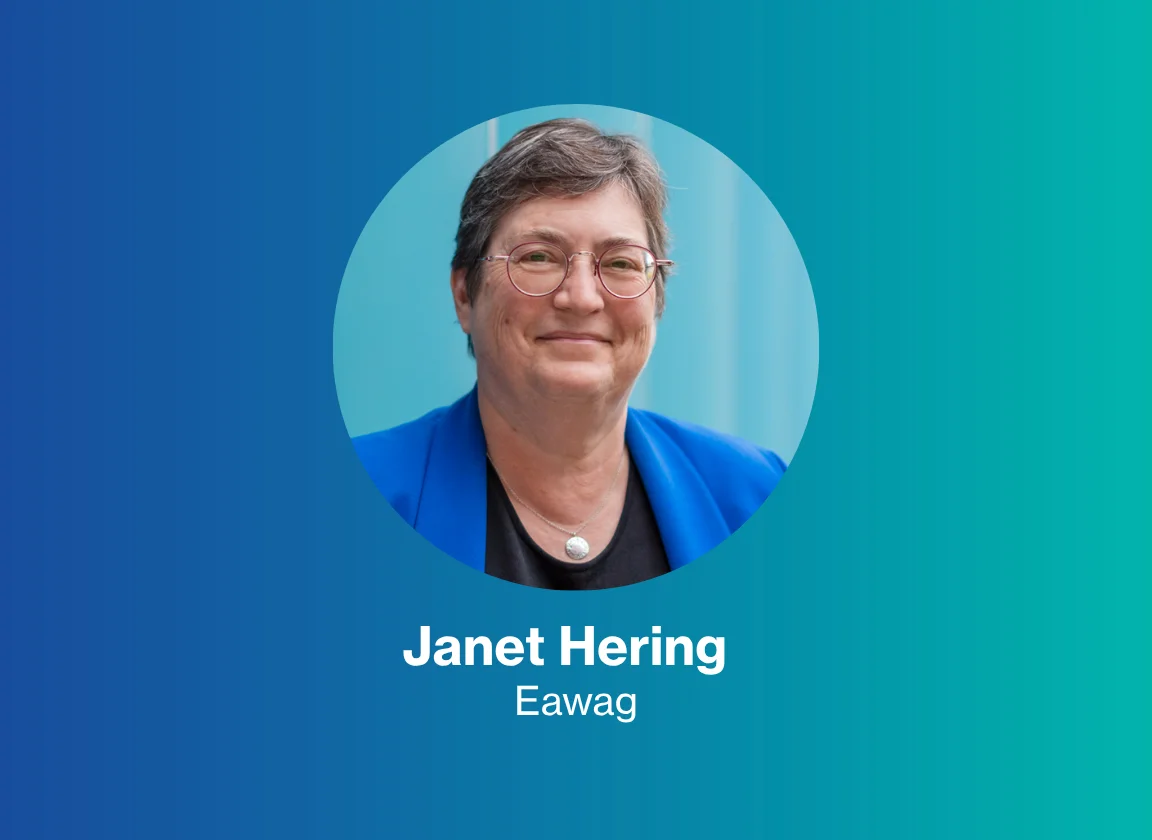
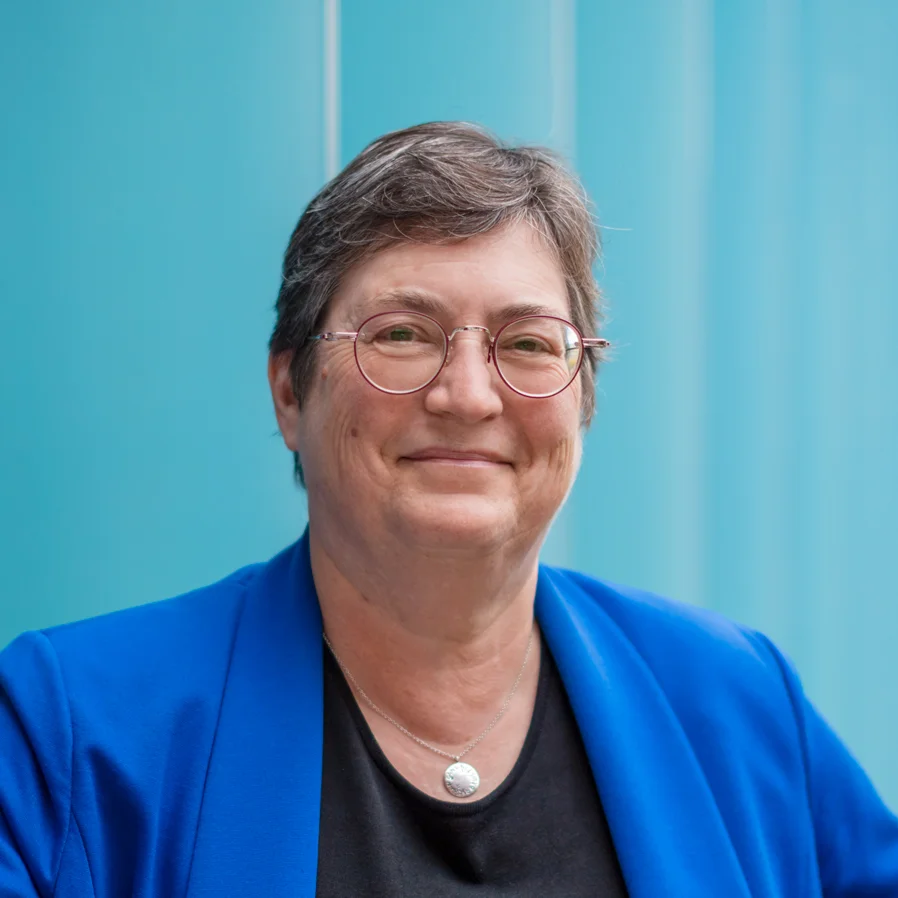
The jury is chaired by Janet Hering, professor emerita at ETH Zurich and EPFL. She spent 15 years as Director of Eawag, the first woman to head a Swiss federal research institute, and before that worked in California on arsenic in drinking water – an experience that shaped her view of how far scientific evidence travels into policy, and where it stops. In this interview she explains what makes a dossier convincing, why coaching women misses the point, and what the applications reveal about the precarity of early-career contracts.
You began your graduate work in organic chemistry at Harvard and then moved to MIT and Woods Hole because you realized that environmental science was where you belonged. What made that clear to you at the time? And what would you say to a young researcher who suspects they are in the wrong field but has already invested years in it?
Undergraduate education at universities in the United States is broader than at Swiss universities. I majored in chemistry but also took a range of other courses. Graduate school is more focused; I enjoyed chemistry but not enough to focus on it exclusively. I also wanted to pursue graduate studies in a more applied field. Early career researchers who are interested in changing fields should take the time to explore options and consider how their previous training can provide them with advantages in a new field. Education is never a wasted effort.
Your work on arsenic in the Los Angeles water supply brought you into direct contact with utilities and regulatory agencies. You have since argued that the bottleneck is often not a lack of research but a lack of implementation. When did you first understand that more than good science is needed to bring about change?
In California, I worked with the Los Angeles Department of Water and Power and the Metropolitan Water District of Southern California. The technical staff of both these agencies is highly professional and dedicated to public service. I also served as a consultant to the scientific advisory board of the US Environmental Protection Agency. From these experiences and my later experiences at Eawag, I came to appreciate that that scientific evidence is only one of many inputs to policy making. I would encourage scientists to engage in dialogue with policy makers but not to expect that scientific evidence will be the overriding factor in decision making.
You have described having many women as peers and role models throughout your career in the United States, and then experiencing a sudden sense of isolation as a woman in academic leadership after moving to Switzerland. What specifically produced that difference and how much of it still exists in 2026?
My experience in the US was shaped by being in the field of environmental science and engineering, in which women have been well represented for many decades. This was also true at Eawag even when I arrived. But in the broader academic landscape in Switzerland, I found the lack of women’s representation quite striking. It’s hard to pinpoint the exact reasons for this difference, but a landmark event in the US academic science community was the publication in 1999 of “A Study on the Status of Women Faculty in Science at MIT”. It was especially important that the MIT President supported the findings of this report and used them as the basis for change at MIT. This had profound impacts on the academic science community well beyond MIT.
Applied to gender equality in Swiss academia, the evidence has been available for decades, yet implementation lags. Where exactly does it break down and who holds the power to change it?
Not only is the evidence available, but laws and policies are also in place. Unfortunately, good intentions do not guarantee equitable outcomes – translation into effective action is needed. A major blind spot has been the failure to recognize the systemic barriers to women’s advancement. Thus, women are coached to adapt to the existing system, but the priorities, structures, and processes within the system are not challenged. University leadership has identified equity, diversity, and inclusion as goals but has not required accountability when outcomes fall short of those goals. It is the university leadership – the people who hold positional authority, control resources, set strategy, and make consequential decisions – that has the power to make the systemic change that is needed.
Skeptics argue that awards, networks and mentoring programs treat the symptoms while leaving the structures that produce the problem untouched. As a former chair of the ETH Women Professors Forum and now president of a jury that hands out awards, what is your answer to that?
I fully agree that structural change is needed. At the same time, increasing visibility for women’s accomplishments shows what the academic community and the broader society are losing when women are discouraged from pursuing scientific careers. The L’ORÉAL-UNESCO For Women in Science awards provide recognition and visibility for outstanding women. It’s true that networking and mentoring programs mainly focus on individuals and often on individual adaptation to existing systems. But networking and mentoring programs can also support reflection on existing systems as a basis for collective action to change them.
The selection criteria are public: research excellence, a clearly articulated proposal, feasibility, and the potential to leverage the grant for a career. From the jury’s side, what actually separates a dossier that convinces from one that is merely strong?
How will the award of 25,000 Swiss Francs actually make a difference to the awardee and her professional development? This is a key question in the mind of the jury members. Given its size, the award can only be a supplement to the awardee’s ongoing research and professional activities. It should not merely substitute for resources that are already available through the awardee’s ongoing project or position. An applicant who can make a strong argument for the added value of the award is more likely to be successful.
This was the second Swiss cohort. Setting the individual laureates aside: what did the field of applications as a whole tell you about the state of early-career STEM research in Switzerland and how did it compare with the first round?
To be honest, we were a bit overwhelmed with the response to the first round. This required considerable flexibility and agility on the part of the SATW staff supporting the evaluation process. The response in the second round was comparable, but we were better prepared. In both rounds the quality of the applicants was truly excellent, which reflects the strength and quality of the Swiss research environment. The application process did, however, highlight the issue of precarity of early-career researchers. Applicants must make a proposal in the spring for funding that would mainly be expended in the following year, which is often after the expiration date of their contracts. For successful applicants, employment must be guaranteed for the duration of the award period. Nonetheless, this highlights the stress and uncertainty associated with short-term contracts.
Picture Swiss academia in ten years’ time: which single structural change would tell you that programs like For Women in Science have done their job and are no longer needed?
Affordable childcare and gender-equitable parental leave. Just recently, the world lost a pioneering feminist, Gloria Steinem (1934–2026). In her acceptance speech for the 2010 Radcliffe medal, Steinem said: “women won’t be equal outside the home until men are equal inside the home”. For this to happen, universities and other leading institutions have to push for societal change and provide a role model for that change.
Janet Hering is an aquatic scientist and professor emerita of biogeochemistry at ETH Zurich and of environmental chemistry at EPFL. She grew up in New York City, studied chemistry at Cornell University and completed her PhD at MIT and the Woods Hole Oceanographic Institution in 1988. After positions at UCLA and the California Institute of Technology, where she worked on arsenic in drinking water in close cooperation with Californian utilities and regulators, she returned to Switzerland in 2007 as Director of Eawag – the first woman to head a Swiss federal research institute, a role she held until 2022. She was elected to the US National Academy of Engineering in 2015 and received the IUPAC Distinguished Women in Chemistry Award in 2015 and the NWRI Clarke Prize in 2018. She is a former chair of the ETH Women Professors Forum and chairs the jury of the Swiss L’ORÉAL-UNESCO For Women in Science program.
| Role | Title + Name |
|---|---|
| Text by | Esther Lombardini |
| Expertise | Janet Herring |