As the most important network of experts for the engineering sciences in Switzerland, our goal is to further enhance Switzerland’s leading position in this field, and to help ensure that findings are translated into technologies and innovations for the benefit of the economy and society.
Translated by an automated translation plugin.
Earthquakes are among the greatest natural hazards. However, it is almost impossible to observe in nature what happens immediately before a rock fracture, because no one knows in advance where and when an earthquake will strike. ETH Zurich’s BedrettoLab turns this situation on its head: in a tunnel in Ticino, with around one and a half kilometres of rock above it, researchers inject water into the rock, thereby deliberately triggering minute vibrations, whilst a dense network of sensors records every movement.
This generates volumes of data that are difficult to analyse using standard seismological tools. This is where the project came in, carried out in 2024 and 2025 by Anne Obermann of the Swiss Seismological Service (SED) in collaboration with Léonard Seydoux of the Institut de physique du globe de Paris (IPGP): A method of unsupervised machine learning developed in France was designed to identify patterns in the recordings that no one had specifically been looking for. The collaboration was supported by the Germaine de Staël funding programme.
Ms Obermann, at BedrettoLab you deliberately trigger tiny earthquakes deep within the rock. What can you observe there that is not visible either in a conventional laboratory or on the Earth’s surface?
At the BedrettoLab, in a tunnel running beneath the Alps, we can study earthquakes directly where they occur: deep within the rock and under natural pressure and stress conditions. By injecting water in a controlled manner, we alter the pressure within small rock fractures and trigger tiny earthquakes. High-precision sensors measure how fractures form, propagate and release stress. This enables us to gain new insights into how earthquakes originate and propagate. The scale of the BedrettoLab is unique in its kind. In a conventional laboratory, the samples are very small and it is difficult to realistically replicate the natural stress conditions of the Earth’s crust. At the Earth’s surface, on the other hand, the distance to the earthquake’s focus is too great to observe these processes directly and in detail.
Your sensors record data continuously and at very high resolution. Where do traditional seismological analysis methods reach their limits when dealing with such large volumes of data?
Traditional seismological methods usually search specifically for earthquake signals that exhibit certain characteristics. At BedrettoLab, however, vast amounts of data are generated, within which even very weak and superimposed signals are hidden. Many of these remain undetected because they are drowned out by noise or do not correspond to the expected patterns. Furthermore, manual analysis is time-consuming and can hardly be applied to continuous measurements on this scale. New, automated methods therefore help us to detect even the smallest events, identify patterns in the data and gain a better understanding of the processes taking place within the rock.
In the project with the IPGP, you searched the data using an unsupervised machine learning method – in other words, without telling the algorithm what to look for. What did it find that had previously been overlooked? And where did the difficulties lie?
The method identified significantly more seismic events than in the previous reference catalogue: in the experiment studied, there were around nine times as many. Furthermore, the method separated earthquake signals, electronic noise and other interference, as well as signals from active seismic sources, much more quickly and reliably than conventional methods. A particular challenge was processing the large volumes of data at extremely high sampling rates in the megahertz range, which required the calculations to be carried out in parallel. Further investigation is needed to determine whether all the patterns found can be unambiguously interpreted in physical terms.
The project title refers to precursor signals of earthquakes. How close is the research to being able to predict earthquakes? And what do your findings mean for Switzerland, for example in relation to deep geothermal energy?
We are still a long way from being able to reliably predict earthquakes. However, our results show that unsupervised machine learning can identify additional seismic events and certain signal groups, including tremor-like signals prior to the activation of a fault zone. Whether such signals can actually be classified as precursors requires further investigation. For Switzerland, this approach could be particularly relevant in the context of deep geothermal energy. A better understanding of fracture processes and the associated seismic activity could, in the long term, help to better assess the risks involved in rock stimulation. However, the method does not currently allow for the reliable prediction or prevention of earthquakes in deep geothermal energy.
How close is research to predicting earthquakes? And what potential does unsupervised machine learning have in seismology in general?
We are still a long way from being able to reliably predict earthquakes. However, our results show that unsupervised machine learning can identify additional seismic events and signal groups that have received little attention to date. This is not only of interest for research into fracture processes and deep geothermal energy. The same fundamental idea can also be applied to other geophysical processes: instead of searching exclusively for known signals, we can systematically scan continuous measurement data for recurring patterns and changes. This could open up new possibilities, for example for monitoring unstable slopes. We still need to investigate how reliably this works and under what conditions.
The method originates from France, whilst the data comes from Ticino. What did the visits to Paris and Grenoble, as well as the return visit to Switzerland, achieve that would not have been possible via video conference? And what did the young researchers in your team take away from these experiences?
The face-to-face meetings in Paris, Grenoble and Switzerland facilitated a direct scientific exchange that goes beyond what is possible via video conferencing. Spontaneous ideas and new approaches, in particular, often emerge more easily in face-to-face discussions when people discuss data, methods and open questions together. This allowed the collaboration between the French and Swiss teams to be deepened and the joint research to be further developed. For the young researchers, the visits were also an opportunity to forge contacts and expand their scientific network beyond their own institution – an important foundation for future collaborations.
The funding programme covers only travel and accommodation costs. What impact does such a small amount actually have, and what advice would you give to researchers wishing to apply?
The budget is, of course, not comparable to the funding for large-scale research projects. Rather, it aims to facilitate collaboration between individual researchers. This is precisely where its strength lies: researchers can spontaneously exchange ideas outside large research consortia, develop them further together and try out new approaches without first having to set up a major project. In our case, the idea of collaborating with France arose spontaneously at a conference; we had not originally set aside any funds for this. The Germaine de Staël grant made this collaboration possible in the first place. I therefore advise researchers to make the most of such opportunities, to actively seek out suitable partners and to be open to shared ideas – it is precisely from small encounters that long-term collaborations can emerge.
I find it particularly exciting that the impact now extends beyond the original project. We initially applied the method to seismic data from controlled experiments in Bedretto. During a reciprocal visit, the idea arose to try out the approach on data from the Blatten ice and rockfall. The initial results were very promising. Thus, a collaboration to research earthquakes has given rise to a new research question concerning the monitoring of natural hazards.
To me, this highlights the particular value of such funding programmes: they not only finance travel, but also create the conditions for personal exchange, new ways of thinking and collaborations, the potential of which often only becomes apparent through working together.
The project has now been completed. What does the future hold for the collaboration and the method? What question would you like to tackle next?
When Léonard Seydoux recently visited us in Zurich, I was in the process of analysing seismic data from the Blatten ice and rockfall in May 2025. That’s when the idea arose to apply our method to this data as well. No sooner said than done: just one day later, we had our first, very promising results. They suggest that, using unsupervised machine learning and data from a single station, we can accurately track activity on a slope. This is not yet a fully operational early-warning system, but it offers an exciting prospect for the future monitoring of natural hazards. We would now like to develop this approach further. Perhaps there will be an opportunity to continue our collaboration with another Germaine-de-Staël grant!
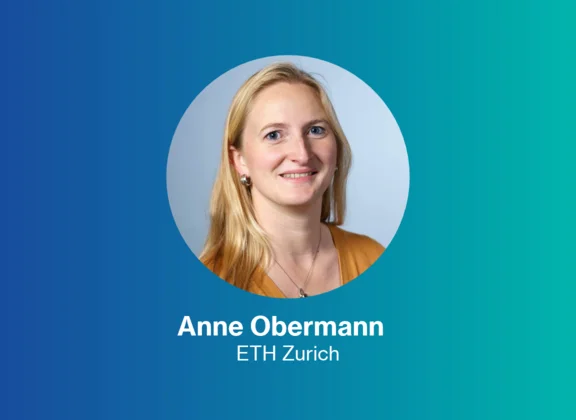
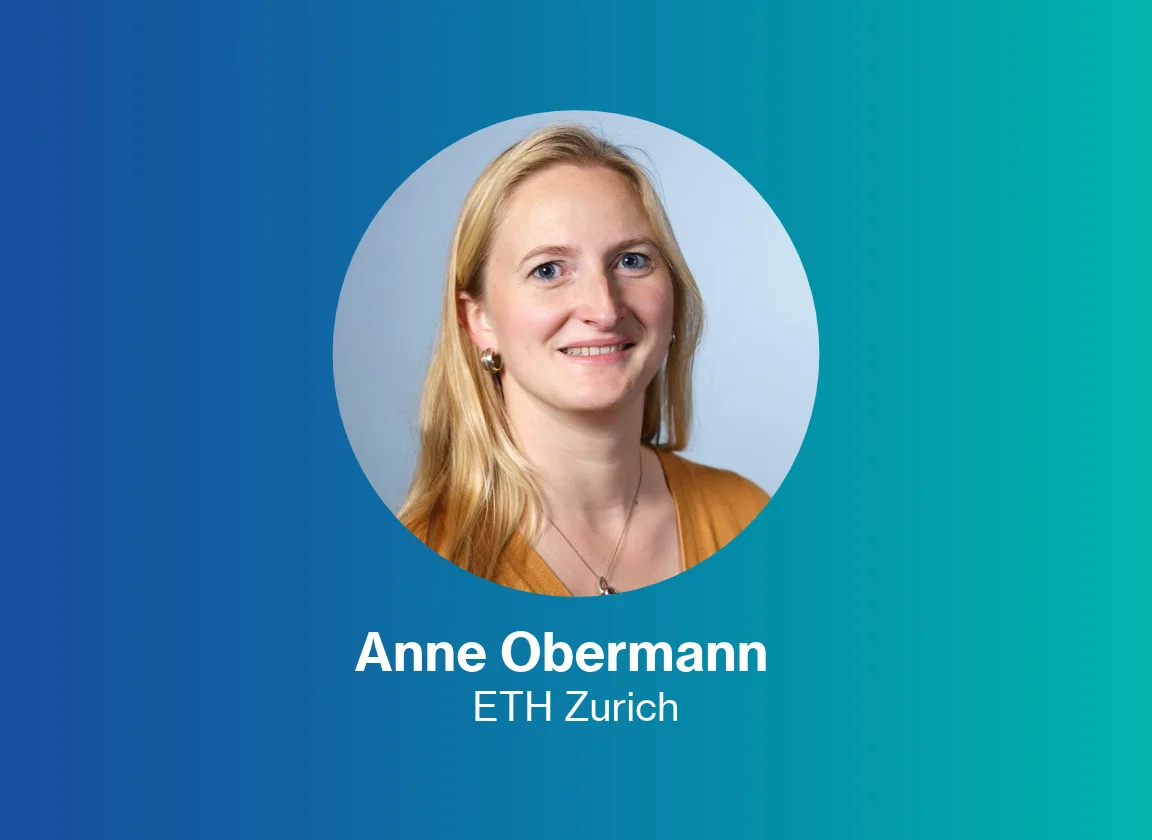
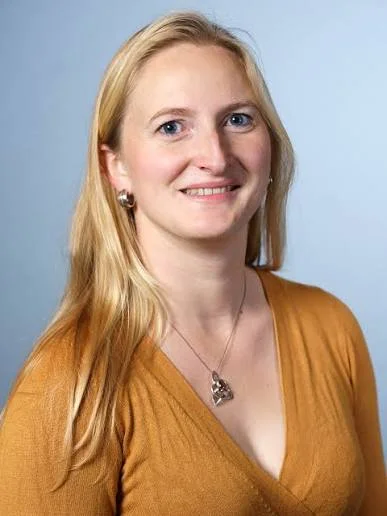
Anne Obermann is a senior researcher and lecturer at the Swiss Seismological Service (SED) at ETH Zurich. There, she heads her own research group on seismic interferometry and is in charge of the Earthquake Processes Section. She develops passive seismic methods to investigate the subsurface and monitor changes therein, for example in the fields of geothermal energy, CO₂ storage and environmental seismology. She also conducts research into induced seismicity. At the BedrettoLab, she oversaw the set-up and operation of the seismic monitoring system for the initial experiments. Obermann obtained her PhD in seismology from ISTerre in Grenoble in 2013 and joined the SED in 2014. In 2024 and 2025, she led the Swiss part of the project funded by Germaine de Staël in collaboration with the Institut de physique du globe de Paris.
| Role | Title + Name |
|---|---|
| Text by | Esther Lombardini |
| Expertise | Anne Obermann |
Esther Lombardini
Committees: Employee
Organization: Swiss Academy of Engineering Sciences SATW
Function: Editor and PR Manager
Website: www.satw.ch
Role: Author | News | 10-08-26
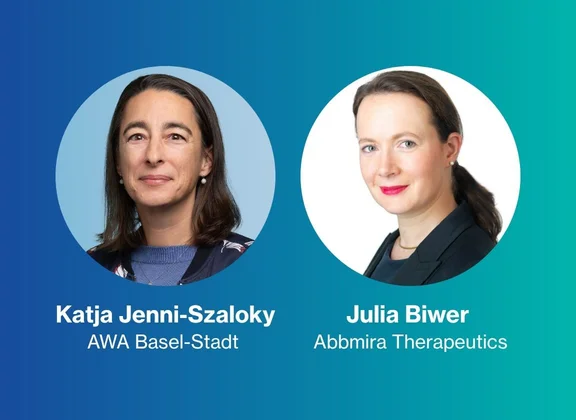
Pharmaceutical innovation rarely arises in the laboratory alone – it requires an entire network. The SATW has interviewed two experts and, in this article, highlights different perspectives on the Swiss life sciences ecosystem: Katja Jenni-Szaloky from the Office for Economic Affairs and Labour in Basel-Stadt describes how the canton creates the right framework conditions; and Julia Biwer, COO and co-founder of Abbmira Therapeutics, explains how a young Basel-based biotech start-up operates within this ecosystem and where it encounters its limitations.
Role: Author | News | 24-08-26
A biotech company without a laboratory? What sounds like a contradiction is, for Abbmira Therapeutics, the smartest business model. The Basel-based start-up is developing a drug to treat cancer and relies entirely on external experts from the Basel life sciences cluster. In an interview with the SATW, Julia Biwer, COO and co-founder, discusses why this model works, why venture capital is hard to come by in Switzerland, and what this reveals about Switzerland’s culture of innovation.
Role: Editor | News | 22-09-26
No sector of the economy can function without semiconductors. Switzerland sources virtually all its chips from abroad. At the same time, it ranks amongst the world’s leaders in selected niche areas: photonic chips, alternative semiconductor materials and highly efficient circuits. The SATW’s new factsheet highlights the sector’s strengths, explains why access to cleanrooms is becoming a bottleneck, and sets out the key areas of action that are now crucial for Switzerland as a semiconductor hub.
Role: Author | News | 22-04-26
Every two years, the SATW Technology Outlook presents future technologies that will shape the Swiss economy and society. In the current issue, four technologies in the field of life sciences stand out that have the potential to fundamentally change medicine, nutrition and sustainability - from viral bacteria hunters and nature-inspired materials to personalised therapies and tailor-made nutrition.
Role: Author | News | 20-01-26
Every two years, the SATW Technology Outlook presents future technologies that will shape the Swiss economy and society. In the current issue, four showcases in the field of life sciences document how Swiss companies are revolutionising cancer research with different approaches - from early detection and new therapies to molecular precision tools.
Role: Author | News | 22-05-26
The Lausanne-based company HAYA Therapeutics, featured in the Technology Outlook showcase “The cryptic messages of our genome”, has reached two significant milestones in quick succession: the first cohort of participants has been dosed in a Phase 1 clinical trial of its lead candidate HTX-001, and the company has been named a “Disruptive Pioneer” in the 2026 Global Pharmaceutical Innovation and Invention Index published by IDEA Pharma. These developments underscore the relevance of the technology identified by SATW’s foresight activities.
Role: Author | News | 28-10-26
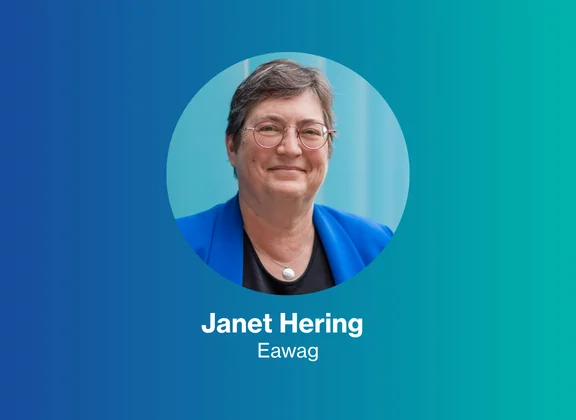
Since 2025, the global L’ORÉAL-UNESCO For Women in Science program has had a Swiss chapter, with SATW as a partner: every year, four early-career researchers working in Switzerland receive 25,000 Swiss Francs each. The second cohort was honored on 21 October 2026. The jury is chaired by Janet Hering – aquatic scientist, professor emerita at ETH Zurich and EPFL, and the first woman to head a Swiss federal research institute, the Eawag. In conversation with SATW, she explains what convinces a jury, why role models alone are not enough, and where the implementation of gender equality actually breaks down.
Role: Author | News | 04-11-26
How do earthquakes occur? Seismologist Anne Obermann from the Swiss Seismological Service, together with a research team from Paris, has applied unsupervised machine learning to data from ETH Zurich’s BedrettoLab. The collaboration was made possible by the Germaine de Staël funding programme. The method identified significantly more seismic events than the previous reference catalogue. This now opens up a broader perspective: initial analyses of data from the Blatten ice and rockfall suggest that the activity of an unstable slope may already be trackable using just a single seismic station. In an interview with the SATW, Obermann explains how a research collaboration gave rise to a new idea for monitoring natural hazards.
Role: Editor | News | 17-08-26
AI models can increasingly be deployed directly on end devices and are no longer reliant on cloud computing power. These so-called edge AI models also have an impact on cyber security. To ensure that Switzerland does not miss out on developments in this area and can deploy edge AI in a secure and trustworthy manner, the new SATW factsheet sets out specific courses of action.
Role: Editor | News | 27-05-26
Digital services are only used if they are considered trustworthy. Although Switzerland took an important step with the narrow acceptance of the e-ID in September 2025, the result also shows that the population's trust in digital solutions cannot be taken for granted. The new SATW factsheet sets out where the biggest gaps are and what measures the federal government, cantons and institutions should take now to make digital trust a reality in Switzerland.
Role: Author | News | 25-09-26
In 2019, Chloé Carrière co-founded Asclepios, Europe’s first student-led analog space mission. The first crew went into isolation in July 2021. In July 2025, the fifth edition spent 16 days underground at the Sasso San Gottardo fortress in Ticino – a mission that the aerospace engineer now accompanies as a mentor. As “Galactic Chloé”, she reaches a broad audience today with space topics on social media, in her own radio column and through documentary films. In an interview with SATW, she explains what students learn from a simulated moon mission, why she believes Swiss citizens should have a say in space policy, why she had to reshape her own dream of walking on the moon and how to keep Switzerland’s young space industry in the country.
Role: Author | News | 05-08-26
Gold from old computers, fertiliser from wastewater, batteries with a second life: the SATW’s Technology Outlook highlights where Switzerland stands today in terms of recycling and which innovations from universities and industry are paving the way towards a genuine circular economy.
Role: Author | News | 17-09-26
Since April 2026, Dr Barbara Frei-Spreiter has been at the helm of Beyond Gravity, the largest Swiss aerospace supplier operating internationally, with 12 sites across six countries. She is taking the helm of this federally-owned company at a time of two major turning points: in 2025, Parliament decided to retain control with the federal government; space has been Switzerland’s official military domain of operations since October 2025; and, following a year of losses, the group is in the midst of a turnaround. In an interview with the SATW, Beyond Gravity’s new CEO explains why dependence is Switzerland’s greatest vulnerability, where she draws the line between commercial business and security considerations, and why a country without its own rocket can still be a leading player in the space sector.
Role: Author | News | 26-08-26
Eleonore Poli, an engineer and materials scientist based in Neuchâtel, is investigating how space technologies can be utilised on Earth, whilst simultaneously preparing for her own spaceflight. As an analogue astronaut, she has already completed several simulation missions under extreme conditions. Alongside her research, she volunteers as a mentor with Swiss TecLadies, the SATW’s national programme for promoting young talent, which encourages young women to pursue careers in mathematics, engineering, natural sciences and technology (STEM). In this interview, she talks about her visions for the future of space travel and explains why role models are so important for younger generations.
Role: Author | News | 03-09-26
Astrophysicist Kathrin Altwegg has analysed the chemical composition of a comet using the ROSINA mass spectrometer in Bern and discovered the building blocks of life. In the SRF summer series ‘25 Years of Tagesgespräch’, she caused a stir in July 2026 with her pointed remarks: She questions the scientific value of manned spaceflight, warns of deadly space debris from 2032 onwards, and is convinced that the likelihood of life in space is high. For her, life on Earth and extraterrestrial life are of equal value. In an interview with the SATW, the professor emerita sets out her theories and explains the significance artificial intelligence will have for space research in the future.
Role: Author | News | 10-09-26
Four telescopes that must maintain a stable focus on extremely faint galaxies for an exceptionally long time, and detectors that remain at a constant temperature of around –130 degrees Celsius throughout: the ARRAKIHS space telescope has been built to the very limits of what is technically possible. In June 2026, the European Space Agency (ESA) gave the go-ahead for the mission – with a Swiss contribution for which Florian Kehl was responsible until the end of 2025. To ensure that such contributions do not remain isolated cases, in addition to high-quality research, we need structures, streamlined processes and people who can get entire missions off the ground. This is precisely what Kehl is working on today as Director of Space Research Initiatives at ETH Zurich | Space. In an interview with SATW, he explains what makes ARRAKIHS so technically challenging, just how competitive Switzerland really is when it comes to securing leadership roles in European missions, and why, in his view, the search for extraterrestrial life might be on the verge of yielding an answer.
Role: Author | News | 20-01-26
The International Space Station (ISS) has shaped space exploration for decades. But its time is running out: it is due to be brought down in a controlled manner in 2030. What comes after that? In this two-part interview series, we talk to SATW expert Deborah Müller about the future of space travel. The first part deals with the major transition from a state-dominated space programme to commercial space travel, the economic opportunities and sustainable innovations such as satellites made of wood.
Role: Author | News | 20-01-26
The commercialisation of space travel opens up new opportunities - but also harbours considerable risks. In this two-part interview series, SATW expert Deborah Müller talks about the future of space travel. The second part deals with the growing threat of space debris, the so-called Kessler syndrome and the innovative solutions that Swiss start-ups are developing.
Role: Author | News | 07-07-26
Two new studies paint a consistent picture: the Haufe Academy’s Trend Radar 2026 outlines the skills required in the workplace of tomorrow. The Swiss STEM Youth Barometer 2026, published by the Swiss Academies of Arts and Sciences, shows where these skills are being developed – or, indeed, where they are not. A comparison of the two reports makes it clear why promoting STEM is not just an educational issue, but also an economic necessity.
Role: Author | News | 03-06-26
Switzerland is faced with an urgent question: where will the electricity come from in winter if nuclear power plants are taken off the grid and consumption increases due to heat pumps and electromobility? A recent report by Axpo paints a serious picture and outlines two possible scenarios. Wind and gas or new nuclear power plants. In an interview with SATW, Dr Nathalie Casas, Head of the Department of Energy, Mobility and Environment at Empa and new member of SATW, analyses the findings. She concludes: "All technologies have their challenges. If you decide against one technology, you have to decide in favour of another.
Role: Author | News | 08-06-26
The adoption of the e-ID was a milestone - but the close vote showed that digital trust cannot be taken for granted in Switzerland. How is it possible to establish a coherent, trustworthy digital administration in a federal system with 26 cantons and thousands of municipalities? Marcel Kessler, Head of Architecture and Standardisation at the Digital Administration Switzerland (DVS), provides an insight into the strategy, the specific measures and the challenges on the way to an interoperable trust infrastructure.
Role: Author | News | 11-02-26
Every two years, SATW's Technology Outlook presents future technologies that will shape the Swiss economy and society. In the current issue, two showcases in the field of energy and the environment document how researchers and companies are extracting gold from waste streams - in an environmentally friendly, innovative and economical way. From whey proteins to bacterial solutions: These articles show how waste is being turned into valuable resources.
Role: Author | News | 11-05-26
The Technology Outlook showcases Apertus as an example of transparent, compliant AI, and examines what its development reveals about Switzerland’s position in the global AI landscape. To explore the deeper ethical, societal, and political implications of large language models (LLMs), we spoke with Dr Ning Wang, an ethicist and political scientist at the University of Zurich. Her research focuses on the responsible development and sustainable governance of emerging technologies.
Role: Author | News | 03-02-26
Switzerland cannot become self-sufficient - but it can become smarter. In the final part of the series, SATW expert Alessa Hool explains the role that recycling, European cooperation and Swiss innovative strength can play and where improvements are urgently needed. Interview series part 3/3: Solutions and Swiss strengths.
Role: Author | News | 26-03-26
Every three years, the Swiss Coordination Centre for Research in Education publishes the Swiss Education Report. This provides a comprehensive overview of the entire Swiss education system, from pre-school to continuing education. The fifth report of this kind was published on 23 March 2026 and serves the Confederation and cantons as a knowledge base for managing the education system and formulating common education policy goals. In this interview, Edith Schnapper, Head of Promotion of Young Talent at the SATW, explains what the report shows for the STEM sector and why targeted promotion is only effective if it starts early, is designed interactively and takes structural barriers into account.
Role: Author | News | 25-02-26
in 2027, Geneva will be the venue for the international AI summit. For Switzerland, this is more than just a prestige project: it wants to position itself as a fair mediator between the major power blocs, present its regulatory approach, which represents a middle way, on the world stage and at the same time provide concrete impetus for globally sustainable AI governance. In an interview with SATW, Thomas Schneider, Ambassador and Deputy Director of OFCOM, explains what is at stake - and why smart regulation is not a contradiction to innovation.
Role: Author | News | 13-01-26
The Federal Council sees no need to systematically regulate critical raw materials in free trade agreements. But how realistic is this stance in the face of growing geopolitical tensions? SATW expert Alessa Hool explains why Switzerland should rethink its trade policy - and what the consequences of an escalation in Taiwan would be. Interview series part 2/3: Geopolitics and trade policy.
Anne Obermann
Organization: ETH Zurich
Role: Expert | News | 04-11-26
How do earthquakes occur? Seismologist Anne Obermann from the Swiss Seismological Service, together with a research team from Paris, has applied unsupervised machine learning to data from ETH Zurich’s BedrettoLab. The collaboration was made possible by the Germaine de Staël funding programme. The method identified significantly more seismic events than the previous reference catalogue. This now opens up a broader perspective: initial analyses of data from the Blatten ice and rockfall suggest that the activity of an unstable slope may already be trackable using just a single seismic station. In an interview with the SATW, Obermann explains how a research collaboration gave rise to a new idea for monitoring natural hazards.