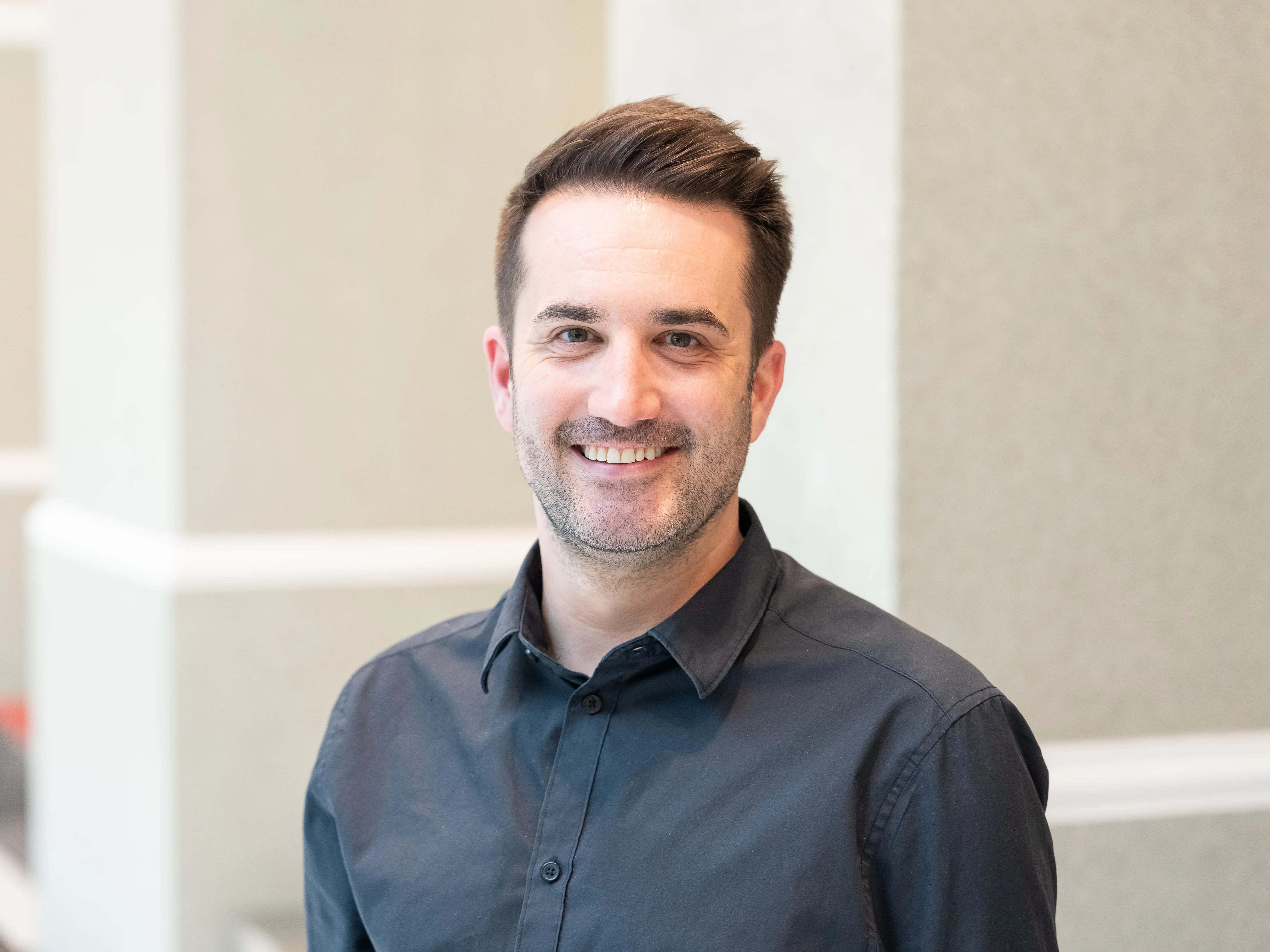
When the European Space Agency (ESA) approves a scientific mission, it is formally given the go-ahead to proceed – a decision preceded by years of concept studies, design work and documentation. For the ARRAKIHS space telescope, which is designed to map the faint halos around galaxies and thus shed light on dark matter, Florian Kehl served for many years as Swiss Project Manager and Deputy Instrument Lead at the University of Zurich, contributing to the project’s success: in June 2026, ESA officially accepted the mission. Since March 2024, he has been Director of Space Research Initiatives at ETH Zurich | Space, the initiative led by former NASA Chief Scientist Thomas Zurbuchen. He is responsible for research activities, heads the Project and Innovation Hub, and helped establish the MSc in Space Systems. As part of SATW’s ‘Space’ theme month, he explains how missions come about and what Switzerland needs to play a leading role in European space exploration.
You are Director of Space Research Initiatives at ETH Zurich | Space – the initiative co-founded by former NASA Chief Scientist Thomas Zurbuchen. What is the vision behind this initiative? And how does your current work differ from your previous work in the laboratory?
Our vision is to bring more Swiss research into space. ETH researchers have already contributed key instruments and components to missions. In future, however, we also want to facilitate entire research and exploration missions – in collaboration with other universities and industry. We do not see ourselves as competitors, but as enablers. I used to spend a lot of time in the laboratory myself, building prototypes. Today, I lead a team of around 20 engineers and project managers. Together, we develop new mission ideas, draft proposals and collaborate with the research community, industry and policymakers. I also now pass on my experience to students.
At the end of 2025, you handed over the Swiss leadership of the ESA ARRAKIHS mission; in June 2026, the ESA approved the mission. What prompted you to move from operational mission work to an institutional role? And what does Swiss participation mean for the local space sector?
Once the first major planning and design phase was complete, I handed over Swiss leadership of ARRAKIHS after we had submitted the full technical documentation to the ESA for the next mission decision. This was a natural point in time, as the industry becomes more heavily involved thereafter. At the same time, I was drawn by the opportunity at ETH Space to contribute not just to one mission, but to many projects and to the development of new structures. I was all the more delighted when ESA officially confirmed ARRAKIHS this summer. Technically, the mission is enormously challenging: four telescopes must point at very faint galaxies for extremely long periods without ‘shaking’ or ‘straying’, whilst the detectors are kept highly stable at around –130 degrees Celsius. For Switzerland, this means new research, industrial capabilities and concrete contracts. For example, engineering posts for development work were created and funded at the University of Zurich, FHNW, HSLU and ZHAW. At the same time, contracts were awarded to smaller Swiss space companies, whilst prototypes for the thermal system and the telescope structure were built by established Swiss space companies, amongst others.
You helped set up the new ‘Master’s in Space Systems’ programme at ETH Zurich. How does this course differ from traditional physics or engineering degree programmes? And how does Switzerland ensure that there are enough skilled workers to meet the needs of the growing space industry?
The ‘Master of Science in Space Systems’ differs from traditional physics or engineering degree programmes in its consistent focus on the overall system. It is not just about individual technologies, but about how a scientific question is turned into a functioning space mission and how instruments, satellites, communications, ground stations, operations and data all work together. Added to this are systems engineering, practical project work and sustainability. In this way, we specifically train people who can think beyond disciplinary boundaries and develop complex space systems. It is precisely such profiles that are urgently needed in Switzerland’s rapidly growing space sector.
Through the ETH Space Project and Innovation Hub, you support researchers in securing roles in major international space projects. How competitive is Switzerland actually today when it comes to leadership roles in missions such as ARRAKIHS, and what would need to change to ensure the country does not fall behind?
Switzerland actually has almost everything it needs to play a leading role in the rapidly growing space sector: outstanding universities, strong research, plenty of technical talent, precision, quality, and political and economic stability. What sometimes holds us back are long and complex decision-making processes, as well as a certain risk aversion, even when it comes to investing in new technologies and start-ups. This is precisely where we come in with the ETH Space Project and the Innovation Hub: through leaner processes, experienced international experts, collaboration and the training of new talent. In this way, we aim to reduce risks in a targeted manner without losing the pace and courage needed for new ideas.
You began your career developing scientific instruments to search for extraterrestrial life. Today, you are in charge of an entire portfolio of space projects involving numerous partners. What has changed for you, and what do you miss about your earlier work?
Deep down, I’m still a tinkerer and an inventor. I love designing, building and testing prototypes – from mechanics and fluidics through to electronics and optics, right up to firmware and software. These days, I hardly ever get the chance to work with a soldering iron, milling machine or laser myself. That work is now carried out by specialists in my team, students or industry partners. In return, I can be involved in far more projects at the same time and work alongside exceptionally talented people. Working with experts who are among the best in the world in their field, whilst still pursuing my childhood dream, is a great privilege for me.
You spent a long time working directly on instruments designed to search for signs of life. How has this work shaped your own understanding of what constitutes life?
Defining life is actually astonishingly difficult. Through my work, however, it has become not less, but even more fascinating to me. The search for extraterrestrial life is one of humanity’s oldest unanswered questions. I’m still working on this today, amongst other things as a member of an ESA expert group for a future mission to Saturn’s moon Enceladus. I believe we might be on the verge of finding a real answer for the first time. This would not only be an astronomical discovery, but could also help us understand how life arises and what constitutes it. We could gain a better understanding of our own biology, open up new avenues for medicine and redefine our place in the universe.
Florian Kehl is Director of Space Research Initiatives at ETH Zurich | Space and works closely with its Director, Thomas Zurbuchen, the former Chief Scientist at NASA. He heads the Project Hub and the Innovation Hub, which support researchers in the development of technologies, instruments and entire space missions. He also helped establish the new Master’s programme in Space Systems and continues to teach on the course. Previously, Kehl headed the Space Instruments Group at the University of Zurich and served as the Swiss project manager for the ESA’s ARRAKIHS mission. From 2016 to 2021, he worked at NASA’s Jet Propulsion Laboratory on instruments designed to search for traces of extraterrestrial life. Today, he remains involved in international missions, including the planning of a future ESA mission to Saturn’s moon Enceladus.
Space exploration is closer than it seems—and Switzerland plays an important role in it. During SATW’s Theme Month “Space: Switzerland as a Space Nation”, you’ll find more stories, developments, and perspectives on research, technology, and space exploration from Switzerland.
| Role | Title + Name |
|---|---|
| Text by | Esther Lombardini |
| Expertise | Florian Kehl |