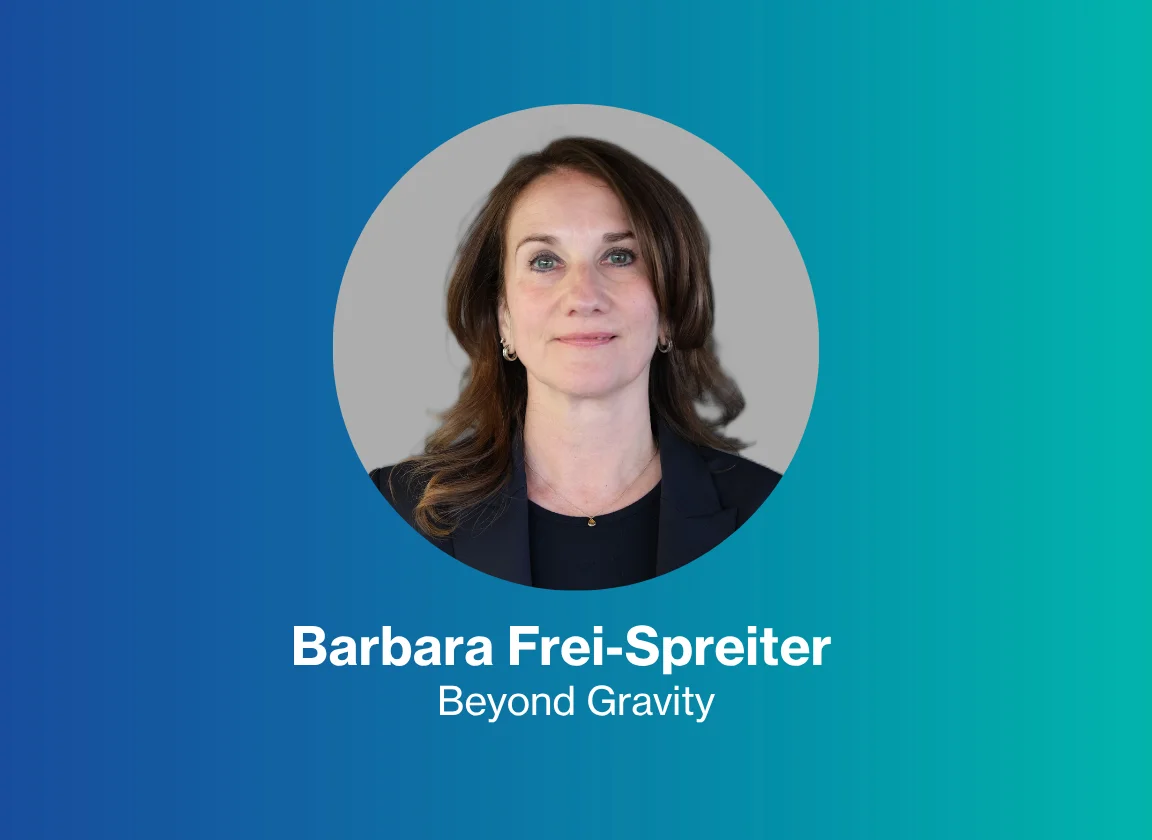
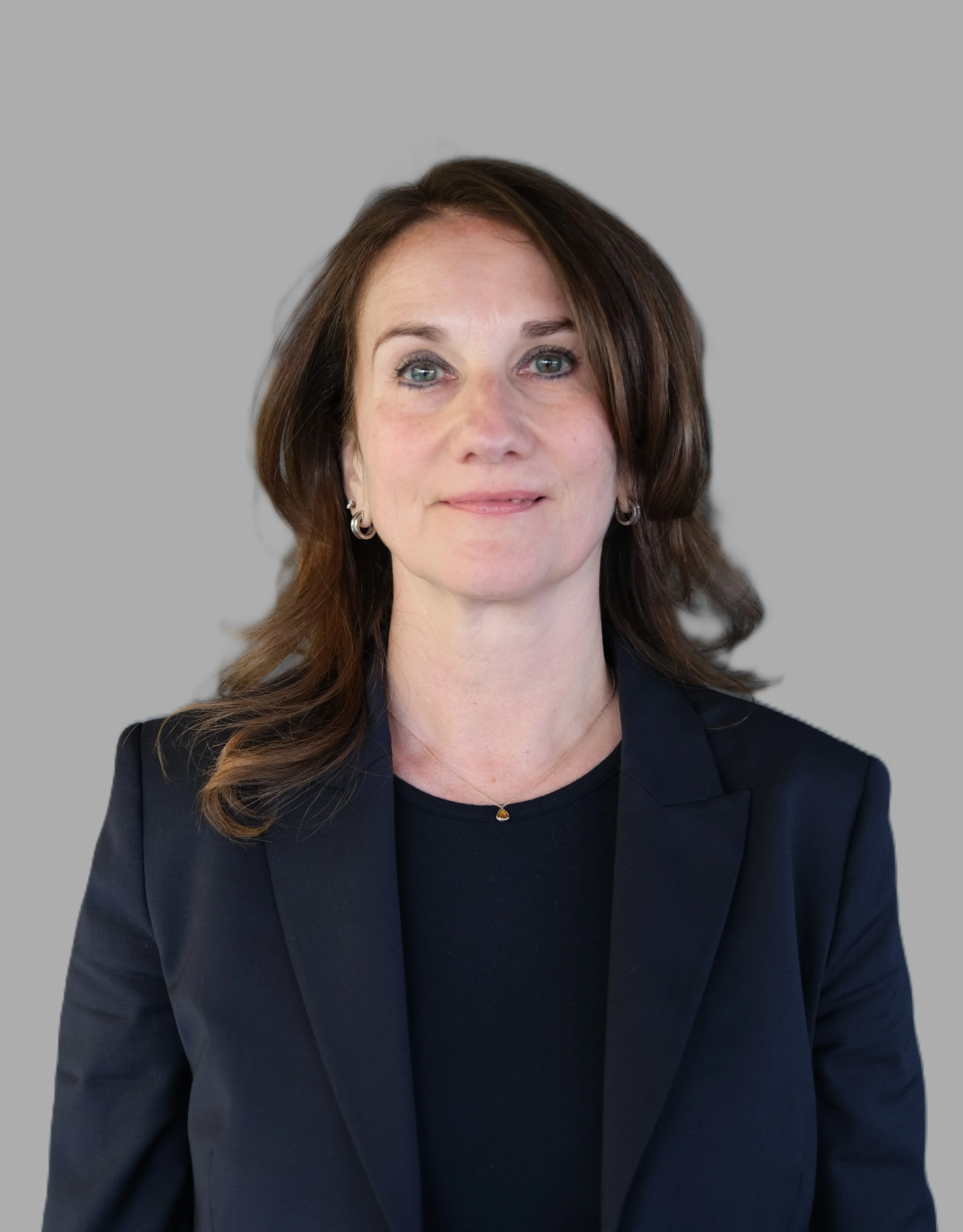
Payload fairings, satellite structures, mechanisms, navigation receivers, satellite dispensers: Beyond Gravity’s products are used on hundreds of missions, and ever since the maiden launch of Ariane in 1979, every Ariane rocket has been equipped with a Swiss-made payload fairing. Barbara Frei-Spreiter has been at the helm of the company since April 2026. A mechanical engineer with a PhD in electrical engineering from ETH Zurich, she has a background in automation and energy technology and was most recently head of the global Industrial Automation division at Schneider Electric. In 2025, she was admitted to the SATW as an individual member. As part of the ‘Space’ theme month, she answers questions on security, geopolitics and the future of Switzerland as a space hub.
Europe is at a turning point in terms of security policy – the war in Ukraine, hybrid threats, cyber-attacks on Switzerland. What does this mean in concrete terms for Beyond Gravity’s strategic direction over the next three to five years? Which priorities are shifting the most as a result?
Navigation, weather forecasting, communications and Earth observation are now increasingly dependent on space infrastructure. This usually goes unnoticed, but it happens every day. Every time you use your smartphone, you are most likely making use of technology from space. The greatest shift in priority is towards sovereignty and resilience: robust supply chains, domestic production capacity and uninterrupted access to data from space have become central. Furthermore, space is increasingly becoming a security issue. Switzerland has responded to this. Since October 2025, space has officially been recognised as a military domain of operations; the Armed Forces’ Space Command has been in place since January 2026; and responsibility for our organisation lies with the Federal Department of Defence, Civil Protection and Sport (VBS). We focus on Swiss space technology that holds its own on the global market. In this way, we help to ensure that expertise, industrial capabilities and access to space-based technologies remain within the country.
Cyberattacks on Swiss institutions have increased. How does Beyond Gravity, as a state-owned company, position itself in terms of cyber defence? And where, in your view, do Switzerland’s greatest vulnerabilities currently lie?
Cybersecurity is absolutely central to our operations. We have therefore invested heavily in the security of our own IT infrastructure in recent years. We are currently undergoing certification to the CMMC (‘Cybersecurity Maturity Model Certification’), the US defence sector’s cybersecurity standard, which is one of the strictest benchmarks in the industry. This is a prerequisite for being able to operate in the US market in the long term. However, CMMC also raises our security standards to a new level overall. I see Switzerland’s greatest vulnerability as being its dependencies. The space industry is globally interconnected, and that is a good thing, because nobody can do everything on their own. What is crucial, however, is the role Switzerland plays within this network. Those who possess their own industrial capabilities and are firmly integrated into international supply chains can engage with their partners on an equal footing and are not merely customers, but partners. That is why it is important that we retain and strengthen these capabilities within the country.
Satellite technology can be used for both civilian and military purposes. Which of your products are dual-use? Where do you draw the ethical line?
I must first put this into context. Today, Beyond Gravity operates almost exclusively in the civilian sector. This is no coincidence, but was the core of the 2019 demerger, when the military business remained with what is now RUAG MRO and the international business was consolidated within our company. Following the divestment of our non-space-related divisions in recent years, we now exclusively supply components used in space applications, including payload fairings, satellite structures, mechanisms, navigation receivers and satellite dispensers, which are deployed on hundreds of missions. We do not manufacture weapons systems. However, certain products are classified as dual-use goods and can be used for both civilian and military purposes. There is a clear framework in place for such cases. As a federal enterprise, we operate within the framework of Swiss export control and war material legislation. As far as I am concerned, space technology should improve life on Earth. It warns of storms days in advance, monitors the climate and provides connectivity where no cable can reach. The fact that these same capabilities are also set to contribute more significantly to a country’s security in future is not a contradiction.
In 2025, Parliament decided to keep Beyond Gravity under state ownership. As the new CEO, what opportunities and challenges do you see in this?
The federal government is to retain control over Beyond Gravity, and the task now is to implement this political decision. Incidentally, it was very well received by customers and staff, as it provides legal and planning certainty. I see an opportunity in the fact that space technology can make a greater contribution to our country’s security and sovereignty in future, and that we are firmly established within this value chain. However, there is also considerable pressure stemming from the business itself: Following a loss-making year in 2025, 2026 will be characterised by stabilisation, risk reduction and the further industrialisation of our production. Our aim is to hold our own in international competition through performance. By 2027, we aim to be profitable again and achieve a positive free cash flow. Because the capital-intensive space sector is developing rapidly and the investment requirements cannot be met either by current operations alone or, in the long term, by the federal government, it is also conceivable that we may one day raise capital from third parties, always on the condition that the federal government retains control.
Space is no longer just a civilian matter: satellites are critical infrastructure for communication, navigation and reconnaissance. How will Beyond Gravity balance this dual requirement of commercial operations and security relevance?
By taking both seriously. The world’s most demanding commercial customers buy from us – Amazon Leo, ArianeGroup, Airbus – and they do so not out of patriotism, but because the performance is right. When it comes to slip rings, for example, we are number one in Europe. No satellite can function without these components. At the same time, Beyond Gravity possesses capabilities that could prove important for the federal government and the armed forces in future, particularly with regard to space security. We are prepared to respond to these needs. These two objectives reinforce one another: only a Beyond Gravity that holds its own in the global market can keep pace with market developments and, where necessary, contribute to Switzerland’s security in space.
You have a background in automation and energy technology. What do you bring from that sector that Beyond Gravity needs right now?
The space industry is undergoing the greatest industrial upheaval in its history. Access to space has become affordable, and the sector is now making the transition from bespoke production to series production. We’re talking about larger numbers of satellites, increasingly frequent rocket launches, shorter cycles and greater cost pressure. These are precisely the kinds of upheavals I have been involved in over the years within the automation and energy technology sectors. What I also bring to the table is the experience of consistently aligning processes and structures with performance and financial success. That is exactly what Beyond Gravity needs right now, as we are in the midst of a turnaround. The foundations for this are in place, with full order books, leading products and outstanding people. As for the differences compared to a large corporation, what I see above all is a smaller organisation, shorter decision-making paths and a sole owner with clear objectives rather than a broad shareholder base. This makes many things easier, and decisions are made more quickly.
The SATW brings together science, technology and society. Where do you see the most pressing task requiring closer cooperation between the technology sector and politics – particularly with regard to Switzerland’s security and digital sovereignty?
The most pressing task is to treat space for what it is today: namely, critical infrastructure and an important foundation for Switzerland’s sovereignty. Weather data, navigation, communications and Earth observation come from space, and nobody can do without them, particularly during a crisis. At the same time, the market is growing by around 5.5 per cent a year – significantly faster than the global economy. The ESA has increased its budget for 2026 to 2028 by 30 per cent. This momentum presents a major opportunity, but it will not materialise on its own. To ensure that this growing market translates into contracts, jobs and expertise within the country, research, industry and the public sector must work together effectively. I also see potential when it comes to training and attracting the right talent for the sector. To this end, we are working with universities and student teams such as ARIS to inspire graduates to pursue a career in this promising field. After all, with over 150 companies in the space sector, Switzerland is one of the most competitive locations in Europe, and the industry is currently organising itself to make this position even more visible.
What is your personal vision for Beyond Gravity in five years’ time?
In five years’ time, Beyond Gravity will be sustainably profitable. I want to make Beyond Gravity the most industrialised player in the space sector – a company that mass-produces space technology from Switzerland for Europe and the global market. In 2028, we will be celebrating 60 years of spaceflight in Switzerland – hardly anyone knows that. In 1968, the first European research satellite, ESRO-1, was launched into space, and its structure was designed by our predecessor company, Contraves, based in Zürich-Seebach. Furthermore, ever since the maiden launch of Ariane in 1979, every Ariane rocket has flown with a payload fairing manufactured in Switzerland. Switzerland has thus demonstrated for six decades that even a small country can be a leading player in space exploration without its own rocket.
Dr Barbara Frei-Spreiter has been CEO of Beyond Gravity and RUAG International since April 2026. She has more than 25 years’ international management experience in global industrial and high-tech companies. She studied mechanical engineering, obtained a PhD in electrical engineering from ETH Zurich and completed an Executive MBA at IMD in Lausanne. She has also been a member of the Board of Directors of Sika AG since 2026. In 2025, she was admitted to the SATW as an individual member – in recognition of her outstanding achievements as a leader in the field of energy management and automation, as well as her significant contributions to sustainability and equal opportunities in industry.
Space is closer than it seems – and Switzerland plays an important role in this. During the SATW Theme Month ‘Space: Switzerland as a Space Nation’, you’ll find further stories, developments and perspectives on research, technology and space exploration from Switzerland.
| Role | Title + Name |
|---|---|
| Text by | Esther Lombardini |
| Expertise | Barbara Frei-Spreiter |