Translated by an automated translation plugin.
Pharmaceutical innovation requires more than just a good idea in the laboratory: it arises from the interplay between science, clinical practice, industry and capital. The SATW’s Technology Outlook 2025, which highlights technologies of strategic relevance to Switzerland as a business location, sets out the conditions required for this – and identifies where Switzerland still has gaps. Abbmira Therapeutics, a Basel-based biotech start-up, is featured in the report as a showcase example in the life sciences sector.
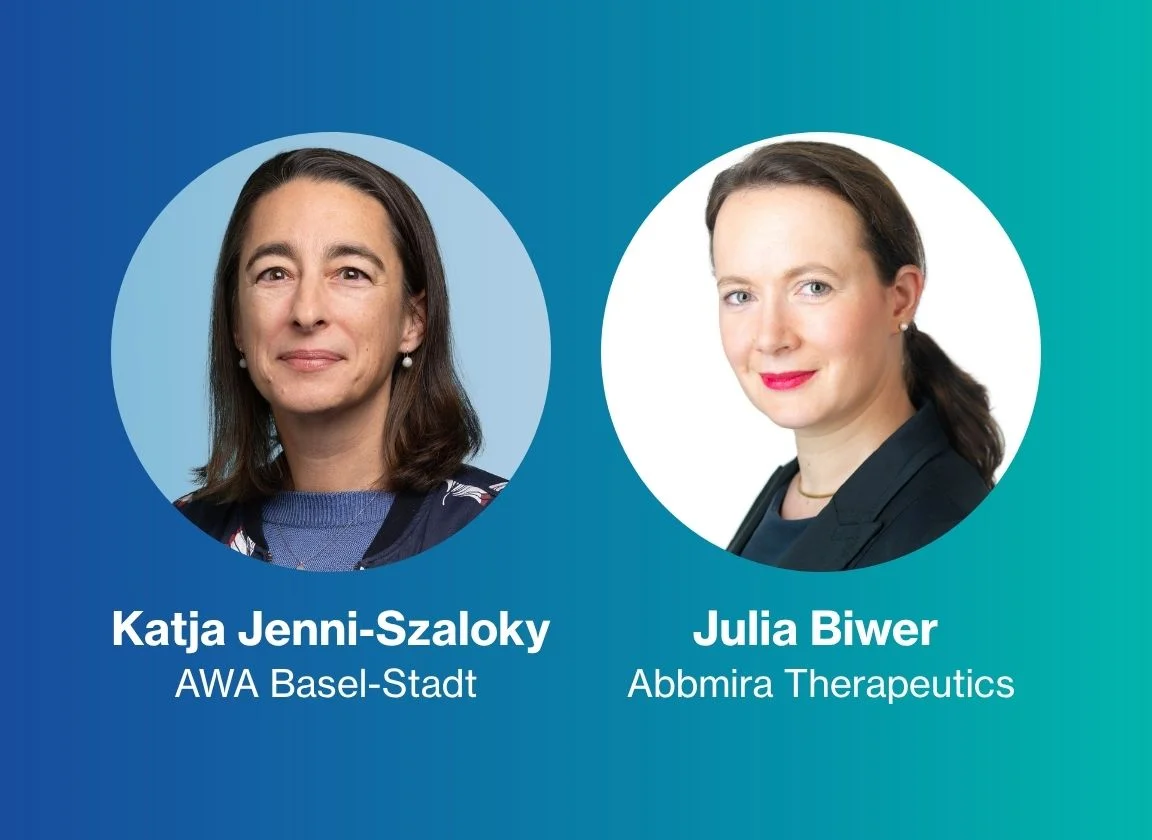
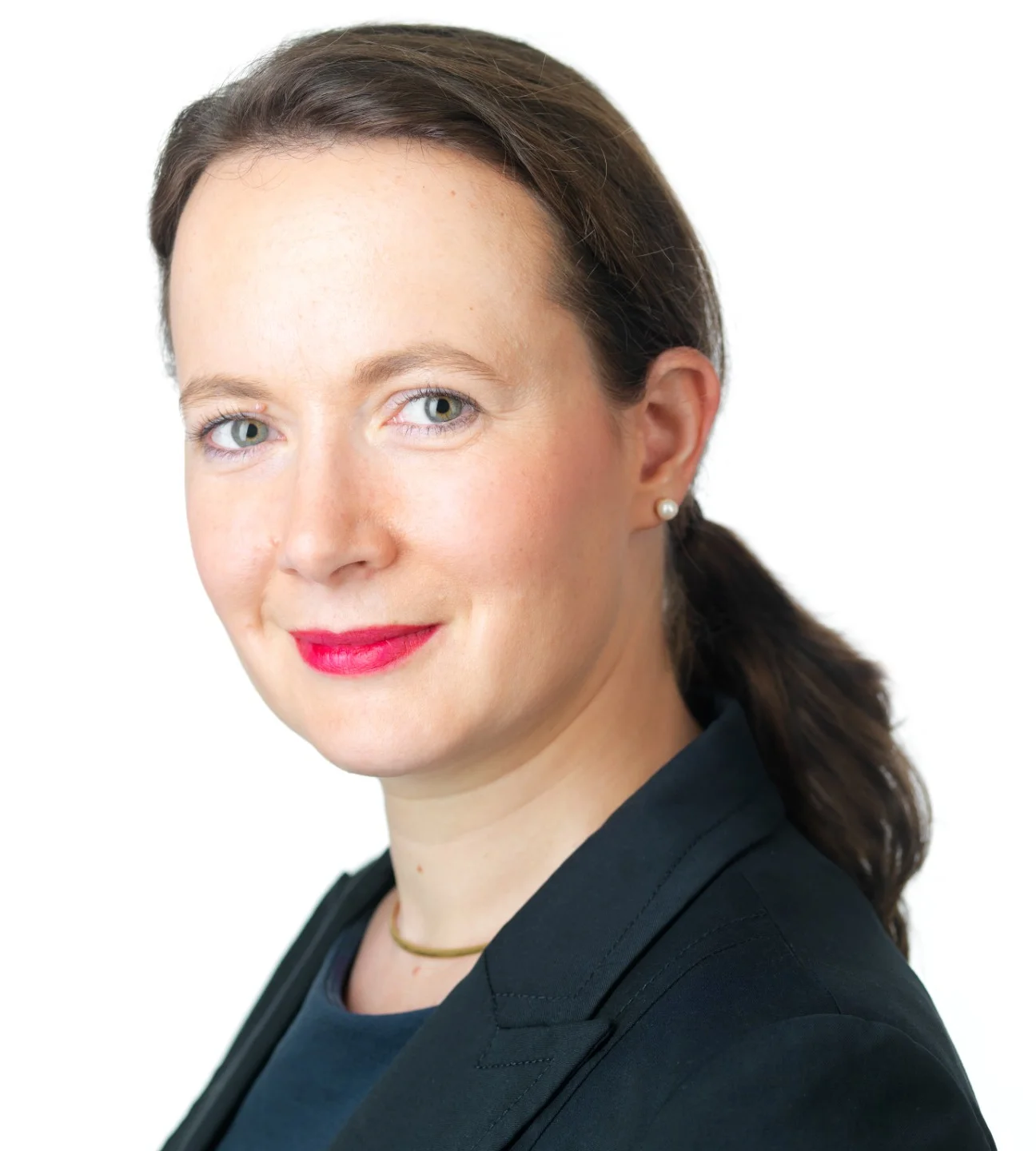
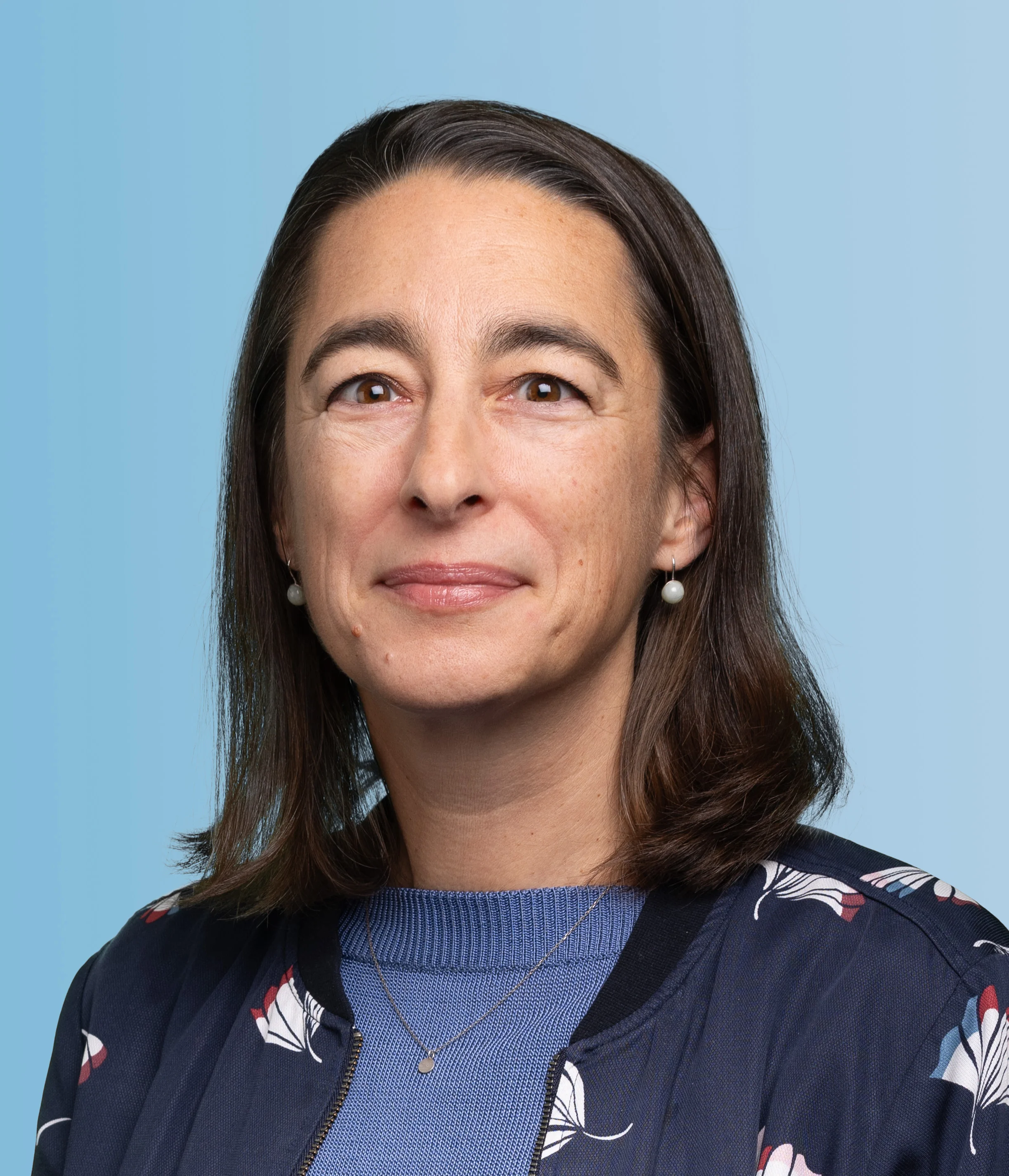
The SATW interviewed two experts who have insight into the Swiss pharmaceutical ecosystem from different perspectives: Katja Jenni-Szaloky is co-head of the Economic Affairs Division at the Office for Economic Affairs and Labour (AWA) in Basel-Stadt and, as a representative of the business development agency, plays an active role in shaping the framework conditions that young companies encounter in Basel. Julia Biwer is COO and co-founder of Abbmira Therapeutics – a start-up that, since September 2024, has been developing a bacterium-inspired active ingredient to treat cancer without operating a single laboratory of its own. Their answers shed light on what sets the Basel ecosystem apart and where it encounters structural limitations. They also explain what is needed to turn excellent research into successful companies.
Which players are the key partners for pharmaceutical start-ups?
Katja Jenni-Szaloky: A successful pharmaceutical start-up is always part of a strong ecosystem. The interaction between various stakeholders is crucial: universities and hospitals provide scientific excellence and clinical expertise; the pharmaceutical industry contributes regulatory experience, global networks and market insight; whilst investors facilitate access to capital and strategic know-how. Equally important are specialised service providers – for example, in the fields of intellectual property, regulation or financing – as well as public authorities and innovation funding bodies, which create the right framework conditions.
Basel boasts an exceptionally dense and internationally connected life sciences ecosystem. Alongside world-leading pharmaceutical companies, numerous institutions actively contribute to fostering innovation and entrepreneurship. These include, for example, Basel Area Business & Innovation with programmes such as BaseLaunch or DayOne, the University of Basel’s Innovation Office, national funding bodies such as Innosuisse, and other start-up and entrepreneurship initiatives.
Infrastructure is also a key location factor: young companies require suitable laboratory and office space right from the early stages. The canton of Basel-Stadt offers start-ups modern and fully equipped laboratory and office space, including at Tech Park Basel. This offering is complemented by other providers, such as the Switzerland Innovation Park Basel on the Novartis Campus. Together with the Basel location package, rent concessions for start-ups and innovation support programmes, these offerings create favourable conditions that enable start-ups to develop innovations more quickly and scale them internationally.
Julia Biwer: Developingmedicines is arguably one of the most complex projects one can undertake. You need a very broad network: highly specialised biochemists with experience in pharmaceutical development, experts in regulatory requirements from the European Medicines Agency (EMA) and the US Food and Drug Administration (FDA), clinicians from university hospitals – and, ultimately, Big Pharma as the end user.
In the field of oncology in particular, modern therapy is so personalised that you can only understand the exact needs if you are closely connected with the treating doctors. We focus on ovarian and lung cancer and therefore work with clinicians who treat patients on a daily basis; not only in Basel, but also in major German centres such as Heidelberg. This clinical network is crucial.
And then, of course, the pharmaceutical industry is also part of our network. But not so much as a competitor, but as a partner. A biotech start-up in oncology can usually only self-fund the first clinical phase, which can already cost thirty million Swiss francs. The later phases, involving sums in the hundreds of millions, can only be funded by Big Pharma. Our aim is to generate the most attractive data package possible by Phase 1 and, at the same time, to forge the right connections within the pharmaceutical industry.
What makes Switzerland unique for pharmaceutical start-ups, and where are the gaps?
Katja Jenni-Szaloky: Switzerland is one of the few locations worldwide where scientific excellence, a globally leading pharmaceutical industry, capital and political stability come together in such a compact area. This concentration is outstanding on an international scale and facilitates close collaboration. This is crucial not only for building trust, but also for finding rapid solutions together.
The Basel region, in particular, boasts an exceptional concentration of life sciences expertise across the entire value chain – from research and clinical development through to production and global market access. This is complemented by a strong ability to attract global talent: international founders now account for around half of all start-up founders in Switzerland – and an even higher proportion among Swiss unicorns.
Financing remains a key challenge for Swiss biotech companies, particularly in the later stages of development. Switzerland lags significantly behind start-up nations such as the US, Singapore and Israel when it comes to venture capital investment. However, we are seeing growth in investment – 2025 was a record year, with 946.3 million Swiss francs flowing into biotech start-ups.
Julia Biwer: What sets Switzerland apart is the quality of its universities and the willingness to collaborate. ETH Zurich, the University of Basel, the FHNW – there’s an open-minded attitude there, a genuine culture of collaboration. We work with partners in different language regions, and yet Switzerland still feels like a connected whole. That’s valuable.
Where we have major gaps is in the financing of early-stage start-ups. Switzerland is traditionally a financial centre – there is little flow of venture capital. Pension funds and institutional investors have, to this day, barely recognised venture capital as an asset class. This is partly a question of mindset: in Switzerland, people prefer to put their money in the bank rather than invest in something risky. That continues to hold us back.
In the biotech sector, there is actually only one programme in Switzerland that invests directly and substantially in biotech firms: BaseLaunch. It’s a good initiative – but only three to four companies are selected each year. Denmark has a comparable incubator in the form of the Bio Innovation Institute and supports 20 to 30 companies a year. That illustrates the difference. Innosuisse is also very valuable, but the funding mainly goes to universities; only a few Innosuisse programmes invest directly in start-ups. Since the end of 2025, Innosuisse funding has increasingly been channelled into more mature companies, whilst young biotech start-ups are finding it significantly harder to raise capital than they did a few years ago. When funding is scarce, it tends to go to companies whose technologies have already been further validated and whose risk can be better assessed. That is the paradox of innovation: when capital becomes scarce, it flows less often to the boldest ideas and more often to the more mature companies.
How do small start-ups innovate in an environment dominated by large corporations?
Katja Jenni-Szaloky: Precisely because pharmaceutical development is complex and high-risk, many disruptive innovations emerge from small, focused teams. Start-ups can make decisions more quickly, take calculated risks and pursue new technologies with determination. The major pharmaceutical companies are monitoring this innovation dynamic very closely. In practice, large and small players often complement one another: start-ups drive early-stage innovation, whilst larger companies facilitate scaling, global trials, regulatory expertise and market access.
Switzerland is doing a lot of things right structurally: strong universities, high-quality research, international networks and a stable environment.
Julia Biwer: Big Pharma is actually no longer our competitor – and that is a significant shift. Over the last 10 to 20 years, large pharmaceutical firms have steadily reduced their own research and development capacities. What we’re seeing today is that the pharmaceutical industry is increasingly buying in: assets developed by biotech firms like ours. The roles are complementary – and from our perspective, that’s a good thing.
The flip side is that, because the pharmaceutical industry is increasingly relying on external innovation, there is now a need for more intensive and earlier collaboration so that the scientific reasoning behind specific development decisions is mutually understood. But fundamentally, the collaboration works well, because biotech provides the early-stage innovation, whilst the big players provide scale, global trials and market access. It works, but close collaboration is very important.
Where do you see the biggest breakthroughs over the next three to five years?
Katja Jenni-Szaloky: It remains to be seen what breakthroughs pharmaceutical research will yield – as a canton, we are following this with great interest. The role of the Canton of Basel-Stadt is to create the right framework conditions so that innovations can reach market maturity and benefit patients. This includes access to talent, international visibility, available space, strong networks and collaborations between established companies and start-ups.
Through the Basel Location Package, Basel-Stadt specifically promotes investment in innovation (up to around 400 million Swiss francs per year) as well as research collaborations between academia and industry, in order to drive forward innovations with global benefits. An annual allocation of 15 million Swiss francs is being used to strengthen research collaborations between universities, research institutions, university hospitals and the local research-based industry.
Julia Biwer: We wholeheartedly welcome the Basel Location Package. It will be particularly important that young start-ups also benefit from these investments, thereby further strengthening the path from excellent research to successful companies. Our main goal is to activate the innate immune system against cancer. This is the ‘Holy Grail’ of oncology, a challenge that has not yet been solved – many have tried, without success. We believe it is worth pursuing research in this direction because the potential is enormous. After all, the immune system is not only relevant to cancer: in addition to cancer, some autoimmune diseases could also benefit from our therapy. For us, these are projects aimed at building up our portfolio.
Our approach can be summarised as follows: ‘Sculpting the innate immune system.’ We do not want to suppress the immune system, but rather influence it in such a way that it actively combats diseases and may even have a preventative effect. To this end, we are focusing on a specific type of cell and asking: how can we activate these cells so that they respond more effectively in the event of disease? That is the vision we are pursuing.
Switzerland plays an important role in this thanks to its strong research base, academic networks and the ecosystem in Basel. The Basel location package offers the opportunity to further expand collaboration between start-ups such as Abbmira and cutting-edge research, such as that carried out at the University Hospital of Basel. We’re young and just starting out, but we’re exactly where we need to be.
Abbmira doesn’t have its own laboratory – everything is carried out via external partners. Is this virtual model unique to the Basel ecosystem, or does it work anywhere?
Julia Biwer: The virtual model isn’t unique to Basel – it’s a necessity. I’m meeting more and more biotech CEOs who are set up this way because it’s simply the smartest model for the early stages. You don’t build up a headcount, and there are no fixed costs for laboratories and equipment. You stay lean, and the moment funding becomes available, it flows directly into research and development.
We’re currently funded by a bilateral Innosuisse grant with a research group in Warsaw, as well as through the three founders’ own investment. Since the end of May 2026, our first external pre-seed round has been open to business angels and family offices. We’ve already secured a number of investments through this. This shows that this model works: you can make scientific progress with minimal resources.
At some point, we’ll have our own laboratory too – that’s on the cards. But as long as we have external experts who provide their services and are simply better at it than we currently are, we’ll work with the best. Basel is a huge help in this regard: there are many experts here who come from Novartis or Roche, are on ‘garden leave’ or want to get involved with start-ups because large organisations are slow-moving and constantly restructuring. There’s no other place in Switzerland with a knowledge pool like this.
Katja Jenni-Szaloky is co-head of the Economic Affairs Division at the Office for Economic Affairs and Labour (AWA) in Basel-Stadt. The Basel-Stadt business development agency specifically promotes collaboration between industry, universities and start-ups. 80 per cent of the Basel business development package is focused on promoting innovation.
Julia Biwer is COO and co-founder of Abbmira Therapeutics in Basel. The start-up is developing a bacterium-inspired active substance that activates the innate immune system against tumours. The company was founded in September 2024 and operates virtually – without its own laboratory.
The interviews were conducted independently of one another; Katja Jenni-Szaloky’s responses were submitted in writing, whilst the interview with Julia Biwer took place in person.
This article was produced as part of the communication campaign for the Technology Outlook 2025 by the Swiss Academy of Engineering Sciences (SATW). The SATW carries out technology foresight on behalf of the federal government; these foresight activities result in the Technology Outlook, which, every two years, examines current and future technologies relevant to Switzerland as a business location. Abbmira Therapeutics is featured as a showcase in the life sciences sector.
| Role | Title + Name |
|---|---|
| Text by | Esther Lombardini |
| Expertise | Julia Biwer, Katja Jenni-Szaloky |