At first glance, the idea sounds a bit far-fetched: why would anyone want to move a factory from Earth into space? Nevertheless, research institutes, space agencies and companies are increasingly looking into what is known as space or in-orbit manufacturing. Under this approach, raw materials would be transported by rocket hundreds of kilometres above the Earth, processed into a product whilst in orbit, and then brought back to Earth.
The main reason for such plans is microgravity. In low Earth orbit (LEO), gravity is practically non-existent, and this is compounded by the vacuum of space. ‘Under these conditions, some products are easier to manufacture than on Earth – and some production processes become possible for the first time,’ says Max Erick Busse-Grawitz. He is Head of Technology Transfer at the Swiss drive specialist Maxon Motor and a member of the SATW’s Scientific Advisory Board.
One example is metal alloys. When materials are mixed together on Earth, components can separate due to differences in density: some sink, whilst others float. In weightlessness, this separation does not occur. This could enable the production of more uniform alloys than on Earth. Semiconductors and crystals, optical fibres, nanomaterials and pharmaceutical-biological products are also among the potential fields of application for space-based manufacturing.
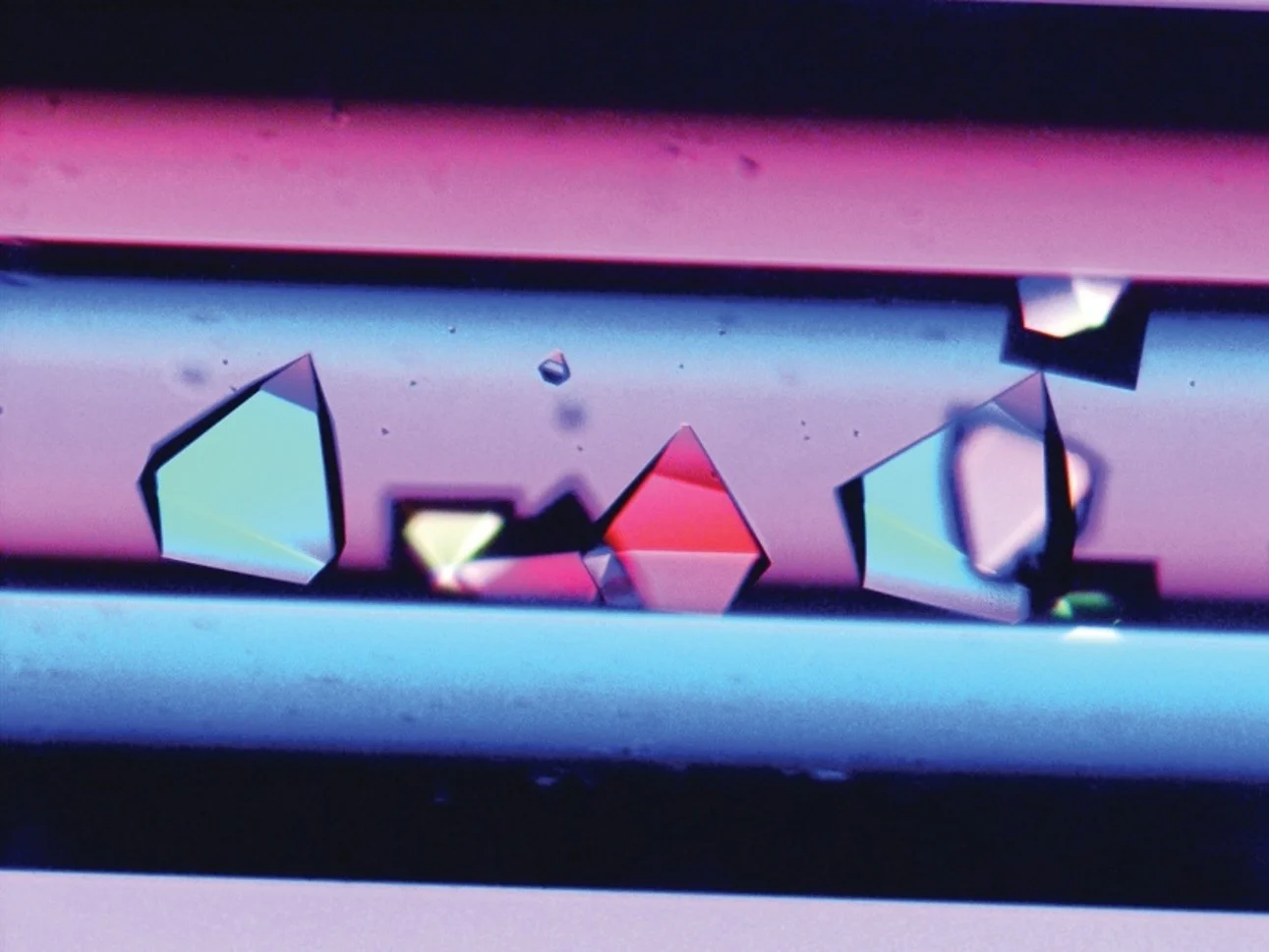
Busse-Grawitz considers the latter to be particularly promising. In microgravity, for example, it is possible to produce almost perfect, regular protein crystals, which are important for manufacturing tailor-made medicines. These are substances that are extremely valuable even in small quantities. The situation is somewhat different when it comes to novel metal alloys. According to Busse-Grawitz, they could be of particular interest in research, but their commercial value per kilogramme might prove too low to justify the expensive transport to space and back.
Transport costs are a crucial economic factor for space-based manufacturing. Although transporting one kilogramme of payload into low Earth orbit using a reusable launch vehicle now costs 95 per cent less than it did in the Space Shuttle era, costs are likely to fall further. “It is considered realistic that, over the next ten years, the price per kilogramme for a return journey can be reduced to under 10,000 US dollars,” says Busse-Grawitz. However, it remains to be seen whether this will be enough to make space-based manufacturing profitable for a wide range of products.
Even if transport costs fall, the question remains as to how factories and production lines in space should be designed: ultimately, they would need to operate autonomously – with pumps, motors, sensors, robots and control systems to monitor their own condition and respond reliably to malfunctions. However, such fully automated facilities could only be developed once all processes have been thoroughly tested under space conditions, says Busse-Grawitz. “This requires people in space.” With the planned decommissioning of the International Space Station (ISS), there will be a lack of such a test facility. “To fill the gap, several consortia are working on facilities roughly the size of a small detached house.” However, it will still take a few years before they are ready.
According to the expert, the energy supply is a prime example of potential stumbling blocks in the construction of low-orbit manufacturing facilities. Although solar cells can now generate electricity in orbit without any problems, objects in near-Earth orbits complete a lap of the Earth in around 90 minutes. They alternate between sunlight and darkness every 45 minutes. “That’s poison for today’s batteries,” says Busse-Grawitz. “Their lifespan decreases rapidly if they are charged and discharged at such a rate.” At least there are now better technologies being developed in research and even by Swiss start-ups.
Added to this is the fact that the logistical challenges go far beyond transport costs. An experiment must not only reach space, but also launch at the right time and return safely after production. Some processes cannot tolerate either long waiting times or severe vibrations during rocket launch. That is why, explains Busse-Grawitz, a transport network is ultimately needed: large rockets offering cost-effective shared flights, but also smaller and more expensive rockets that fly precisely when the customer needs them.
Some products may not even require a prolonged stay in space, but merely a few minutes or seconds under microgravity conditions. “This could be achieved through parabolic flights using rockets or aeroplanes, or even with a large drop tower on Earth,” says Busse-Grawitz. “We have very good infrastructure for this in Switzerland too.”
Large-scale industrial production does not yet exist. Some technologies have already been demonstrated under space conditions, says Busse-Grawitz. Others are still at an early stage of research. Much of the work lies between the scientific proof of a principle and the development of robust, automated systems.
However, the emerging value chain could offer opportunities for Switzerland. “We have world-class expertise: ranging from the pharmaceutical industry, space biology, laboratory automation, robotics, sensor technology and photonics, through to parabolic flight, and including combustion engines and environmentally friendly fuels for smaller rockets,” says Busse-Grawitz.
Such high-tech components could also become business areas for smaller Swiss companies. These do not necessarily have to be purely space-based companies, says Busse-Grawitz. “It can even be an advantage if a company perfects its technology or systems for applications on Earth and only then transfers them to space.”
Swiss universities and research institutions are also working on technologies for this sector. These include initiatives such as ETH Zurich | Space, the UZH Space Hub at the University of Zurich, the Biotechnology Space Support Centre (BIOTESC) at the Lucerne University of Applied Sciences and Arts in Hergiswil, the CSEM Technology Innovation Centre in Neuchâtel, as well as networks such as the Centre for Space and Aviation Switzerland and Liechtenstein (CSA) or the SSIP Space Systems Innovation Platform.
It remains to be seen just how significant the resulting low-orbit industry will be. However, with its strengths in research, precision engineering and high-tech, Switzerland is well placed to play a part in it.
Space exploration is closer than it seems—and Switzerland plays an important role in it. During SATW’s Theme Month “Space: Switzerland as a Space Nation”, you’ll find more stories, developments, and perspectives on research, technology, and space exploration from Switzerland.
| Role | Title + Name |
|---|---|
| Text by | Simon Koechlin |
| Expertise | Max Erick Busse-Grawitz |