Companies, critical infrastructure and even the general public face a growing risk of cyberattack. SATW helps make Switzerland more secure by networking experts, providing guidance and formulating aids on the complex issue of cybersecurity.

News

 
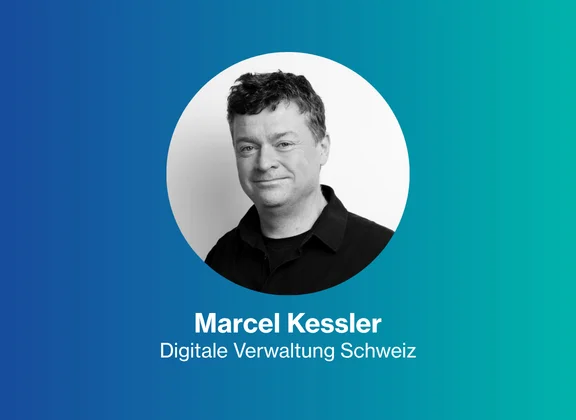
Portrait of Marcel Kessler with blue background

"Securing trust is an ongoing task": How Switzerland's digital administration creates trust

Cybersecurity Digital self-determination
 

Cybercrime in Switzerland: Who is being attacked and how?

Cybersecurity
 
[Translate to English:]

SwissCyber initiative

Cybersecurity

'SwissCyber Initiative': Mapping Swiss Cybersecurity Research

The 'SwissCyber Initiative' is putting together a comprehensive overview of Switzerland's research landscape in the field of cybersecurity. The aim? To help researchers connect more effectively, whilst shining a light on the blind spots within the Swiss cybersecurity ecosystem. The results will be open to the public from the end of 2026 via a searchable platform with interactive graphics.
Find Out More

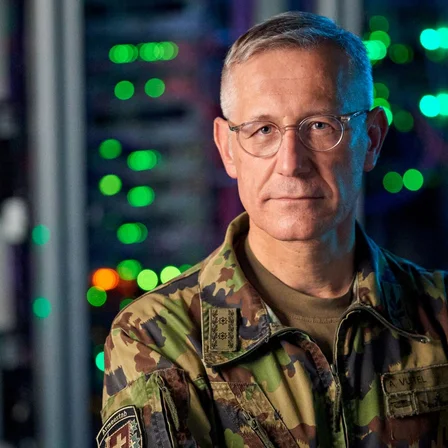
Foto von Alain Vuitel

How much cyber sovereignty does Switzerland need? If we are to lead our country into a secure future, it is essential that we resolve strategic issues such as these. SATW facilitates discussions of this nature and enlists outstanding minds to develop solutions for Switzerland as a nation. 

Major General Alain Vuitel, Project Manager, Armed Forces Cyber Command
Cybersecurity challenges for the Swiss government

Many of the technological developments of our age are closely connected to different aspects of cybersecurity. The SATW Cybersecurity Advisory Board has identified the key technological developments that are relevant from a cybersecurity perspective. It issues recommendations for decision-makers in government and administration on the action that needs to be taken now to equip Switzerland for the challenges of tomorrow.

To the Cybersecurity Map

Publications

Cyborgs and body hacks

11:44

Add to bookmarks Remove from bookmarks

Technoscope 3/2018

Translated with DeepL

Technical aids are not only used to replace missing senses, but sometimes also to enhance people's sensory abilities.

Neil Harbisson, who has been unable to perceive colours since birth, is described as the first cyborg ever. The photo on his ID card shows a small technical device protruding from his head. It is a colour sensor fixed in his skull. This sensor registers the wavelength of the colour in front of him and transmits it to a chip in the back of Harbisson's head. There, the information is converted into sound waves - each colour is translated into a note. The sounds reach Harbisson's auditory system via bone conduction so that he can hear the colours. A visit to the supermarket with all its colourful packaging sounds like a visit to a nightclub to him. After years of training, Harbisson can even perceive colours in the infrared and ultraviolet range that are invisible to humans. Harbisson now sees the colour sensor as part of his body and not as a device.

Harbisson founded the Cyborg Foundation together with his partner Moon Riba in Barcelona in 2010. Riba is able to sense earthquakes via implanted magnets. Both pursue a more artistic approach and want to give people new sensory experiences.

Existing RFID chips to open the front door or an implantable compass, for example, are likely to have more practical uses. Some of these body hacks are already available for purchase. In February 2018, the Augmented Human International Conference, which focussed on sensory-enhancing technologies, was held for the eighth time. The "augmented human" is not a vision of the future, but is already walking among us.

More videos about Neil Harbisson

https://www.youtube.com/watch?v=5wXagCcI_lI

https://www.youtube.com/watch?v=qTKVQmXq0CA

Augmented Human International Conference

http://www.sigah.org/AH2018/

Cybersecurity Topical Plattform

How can Switzerland best prepare for cyber threats? This is where the SATW’s thematic platform comes into play. The platform advises the secretariat on matters relating to cybersecurity and the strategic direction of the priority programme. It regularly identifies new relevant topics and highlights specific areas for action. In this way, the thematic platform helps ensure that Switzerland is as well-equipped as possible to defend itself against cyber threats.

More