As the most important network of experts for the engineering sciences in Switzerland, our goal is to further enhance Switzerland’s leading position in this field, and to help ensure that findings are translated into technologies and innovations for the benefit of the economy and society.
Translated with DeepL
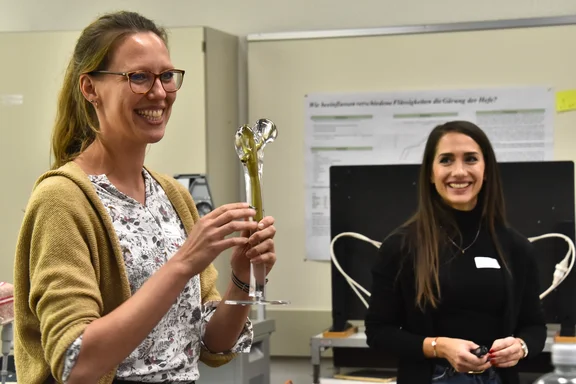
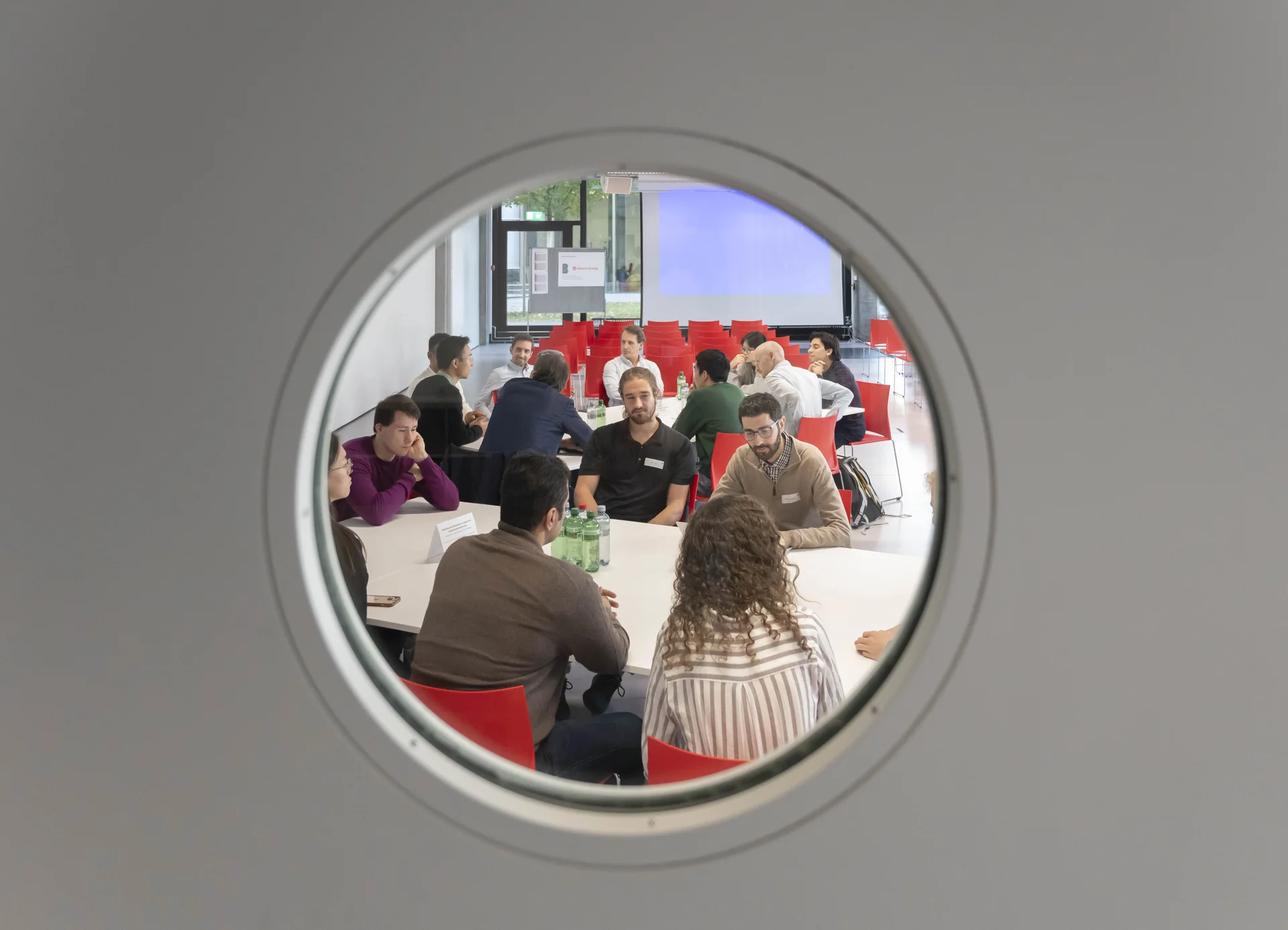
On 30 October 2025, around 100 young researchers gathered at the Switzerland Innovation Park Biel/Bienne (SIPBB) to discuss current research priorities in the field of advanced manufacturing in Switzerland - for example in the fields of additive manufacturing, coating technologies and nanofabrication - as part of the Swiss Advanced Manufacturing Community Events (SAMCE) 2025.
The annual event is aimed specifically at young talents from science and research. The focus is on the idea of forging interdisciplinary links at an early stage and facilitating collaboration across institutions. Many participants take the opportunity to reflect on issues from their day-to-day research and learn from each other.
The keynote speeches by Julia Steinberger from the University of Lausanne and Tobias Keller from Hitachi Energy set an important tone. Both provided insights into topics that go far beyond technical issues: how we can live well within planetary boundaries and how the most complex man-made structure - the electricity grid - works. These contributions emphasised how central interdisciplinary research and development are to the responsible use of technology and the future design of advanced manufacturing.
Participants went on to present their personal success stories, report on technical hurdles and formulate new ideas for future projects. The exchange showed how valuable different perspectives are and how much joint learning enriches the research community.
Finally, particularly convincing presentations were honoured. The SATW asked the winners three questions, which they used to briefly profile the young talents.

What was your presentation about, in a nutshell?
Yong Ding: My presentation showed how wood-hybrid materials can transform buildings into carbon-storage assets. By extracting calcium from recycled concrete and binding it with CO₂, we create carbon-rich minerals that can be embedded into wood. These wood-mineral composites store CO₂ both through the natural biogenic carbon in wood and through additional CO₂ mineralization. This circular approach enables sustainable building elements such as coatings, particleboards, and bricks, that are environmentally friendly, durable, and carbon-storing.
Ali Jafarabadi: I presented self-locking shape memory coupling technologies at SAMCE 2025. As structural engineers, we design and realize various components and structural systems. Whether in the construction, automotive, medical, or aerospace industries, mechanical performance is predominantly driven by the joint, as is assembly time. Self-locking shape memory couplers, however, are exemplars of metallic coupling systems, offering unique features such as self-actuation and rapid assembly in comparison to conventional welded, bonded, machined, or bolted joints.
Romain Trihan: The presentation introduced a combination of subtractive and additive manufacturing to produce high precision microcomponents made of ceramics, using a cost-efficient and time-saving fabrication approach. First, a laser ablation process is used to produce a mold with the required design. Then, the additive manufacturing procedure consists of casting a ceramic slurry into the fabricated mold.
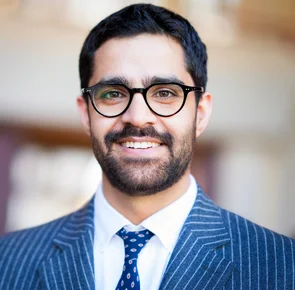
What does this award mean to you?
Yong Ding: I have been part of the SMACE community since my PhD, and I’ve received so many valuable insights and support from this inspiring group. Being recognized with this award is a great honor and an encouragement to continue developing sustainable, circular materials that can make a difference.
Ali Jafarabadi: During the course of my master's and PhD studies, SAMCE events have always been the ones to look forward to. The interactive programs consistently fully engage the participants. I was surprised and definitely honored to receive the CONNECT Talk Award. I'm glad that I was able to deliver an engaging talk that truly CONNECTED with the audience.
Romain Trihan: This award is the recognition that the proposed process is of high interest for the industrial spheres. Consequently, it should be investigated even more to understand its limitations and investigate additional designs, so to extend the possible applications. I also would like to develop the business idea of producing and commercializing products manufactured thanks to this process. This award and recognition will surely help in this prospect.
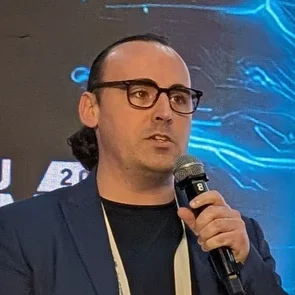
How will your research benefit society in the future?
Yong Ding: The building sector accounts for around 40% of global CO₂ emissions. My research targets both embodied and operational carbon by developing energy-efficient, CO₂-storing, wood-based materials through advanced processing and material engineering. I’m excited to rethink how we design building materials for a low-carbon future and contribute to the broader decarbonization of the building sector.
Ali Jafarabadi: The recent successful implementation at CERN has demonstrated the potential of NiTi-based shape memory couplers used as beam couplers in the particle accelerator. In our research at Empa, we are focused on delivering a more cost-effective self-locking coupling technology that harnesses iron-based shape memory alloys. Given the growing market for the renovation and transition of our infrastructures, our innovative coupling system enables faster, more cost-effective, and smarter transitions in renewable energy pipelines, bridges, and infrastructure development.
Romain Trihan: Some produced microcomponents are intended to be used in creams or for skin treatments, reducing the pain or also the social discomfort that sometimes patients can experience. On the environmental aspect, the process contributes overall to reducing grey energy consumption. In addition, one specific design that we are currently producing will allow to consider applications as membrane supports. That way, we are expecting to reduce drastically the CO2 emissions.
Gold partners: Bern University of Applied Sciences, Hitachi Energy