Artificial intelligence is the dominant technology of our time. Its use promises many benefits, particularly for businesses, but also carries various risks. At a higher level, these risks are addressed in part through regulations. In practice, however, companies rely on technical standards to meet the requirements defined by law.
To outsiders, the world of standardization seems complex. The rapid pace at which AI has developed in recent years has led to numerous initiatives, and the standards landscape in this field appears particularly confusing. Here, we’ll guide you step by step through the topic with clear, easy-to-understand information, provide direction, and offer an overview of the most important developments in this dynamic—yet still underappreciated—field.
Here you will find articles that provide a step-by-step introduction to the world of international AI standardization: from the general importance of technical standards to the key standard-setting organizations, their processes for developing international technical standards, and an overview of the most important AI standards. These articles are updated on an ongoing basis.
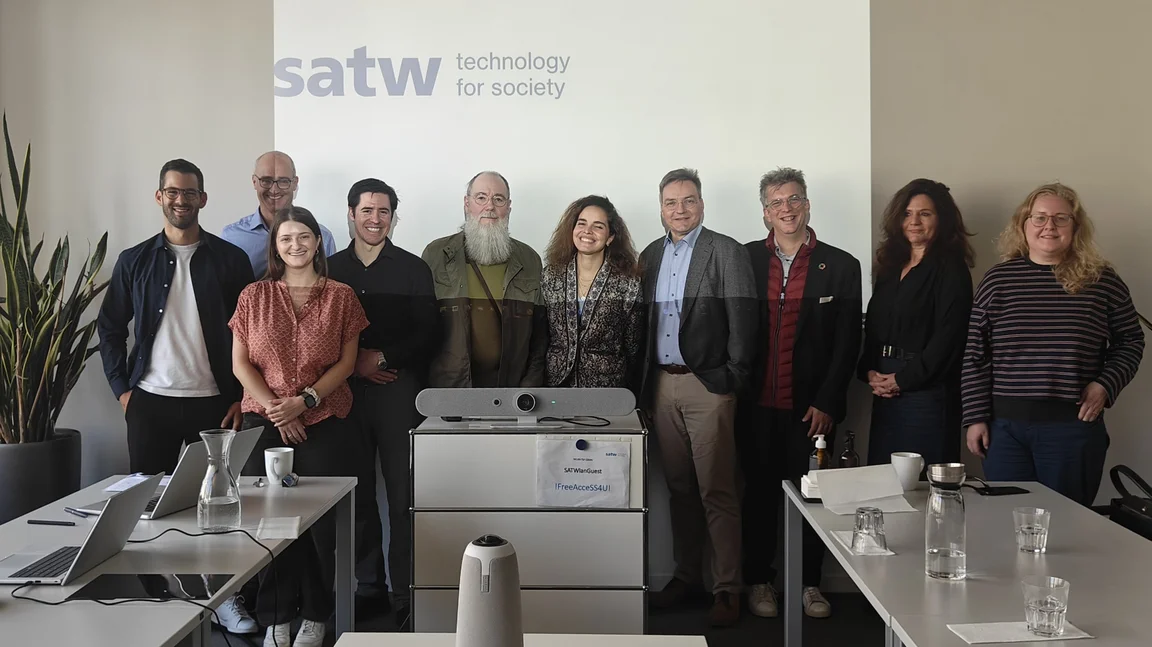
The UK 42 Artificial Intelligence Subcommittee of the Swiss Standards Association (SNV) serves as the national platform for Switzerland’s participation in international and European AI standardization.
Through this subcommittee, Swiss experts contribute directly to the development of standards for artificial intelligence, including within ISO/IEC SC 42 and CEN-CLC/JTC 21. The resulting standards establish a common foundation for the quality, transparency, security, and interoperability of AI systems and play a key role in the implementation of the European AI Act. UK 42 brings together Swiss expertise and enables companies, research institutions, government agencies, and other stakeholders to actively shape the future of AI standardization.
You, too, can help shape the future of AI standardization. We look forward to hearing from you.
ISO develops international standards that promote global trade, cooperation, and the compatibility of products, services, and processes. In the field of artificial intelligence, standardization work is carried out primarily by the ISO/IEC SC 42 Artificial Intelligence technical committee.
The IEC is the world's leading organization for international standardization in the fields of electrical engineering, electronics, and related technologies. It develops global standards that promote safety, interoperability, and innovation, and, together with ISO, lays the foundation for numerous standardization activities in the field of artificial intelligence.
The International Standardization Committee on Artificial Intelligence is developing global standards for terminology, governance, risk management, data quality, and the reliability of AI systems.
The European Committee for Standardization (CEN) is one of the three recognized European standardization organizations and develops standards for a wide range of economic and technological sectors. In the field of artificial intelligence, CEN works together with CENELEC in Joint Technical Committee 21 (JTC 21) on standards that, among other things, support the implementation of the EU AI Act.
The European Committee for Electrotechnical Standardization (CENELEC) is the European standards organization for electrotechnology, electronics, and digital technologies. Together with CEN, CENELEC coordinates European AI standardization within Joint Technical Committee 21 (JTC 21) and contributes to the development of standards for the implementation of the EU AI Act.
The European Standardization Committee for Artificial Intelligence is developing standards for trustworthy AI and, among other things, is drafting harmonized standards to help companies implement the EU AI Act and demonstrate compliance with it.
The Swiss Standards Association (SNV) is Switzerland’s national standards organization. It represents Swiss interests in European and international standards-setting bodies and coordinates the participation of experts from business, academia, government, and civil society in the development of standards. Through its standards committees, including UK 42 Artificial Intelligence, it contributes Swiss expertise to the development of standards for trustworthy artificial intelligence.
The EU AI Act establishes the legal framework for the development and use of artificial intelligence in Europe. Its requirements are specified in European standards, which help companies demonstrate the compliance of their AI systems and implement trustworthy AI in practice.
ISO/IEC 42001 is the first international standard for management systems in the field of artificial intelligence. It helps organizations develop and deploy AI systems in a responsible, transparent, and traceable manner.
The OECD AI Principles are among the world's most important guidelines for trustworthy AI. They define principles such as transparency, fairness, accountability, and robustness of AI systems.
The AI Standards Hub provides an overview of international AI standardization and makes standardization activities easy to understand. The platform is aimed at companies, researchers, government agencies, and other interested parties.