Companies, critical infrastructure and even the general public face a growing risk of cyberattack. SATW helps make Switzerland more secure by networking experts, providing guidance and formulating aids on the complex issue of cybersecurity.

News

 
Portrait of Marcel Kessler with blue background

"Securing trust is an ongoing task": How Switzerland's digital administration creates trust

Cybersecurity Digital self-determination
 

Cybercrime in Switzerland: Who is being attacked and how?

Cybersecurity
 
[Translate to English:]

SwissCyber initiative

Cybersecurity

'SwissCyber Initiative': Mapping Swiss Cybersecurity Research

The 'SwissCyber Initiative' is putting together a comprehensive overview of Switzerland's research landscape in the field of cybersecurity. The aim? To help researchers connect more effectively, whilst shining a light on the blind spots within the Swiss cybersecurity ecosystem. The results will be open to the public from the end of 2026 via a searchable platform with interactive graphics.

Find Out More

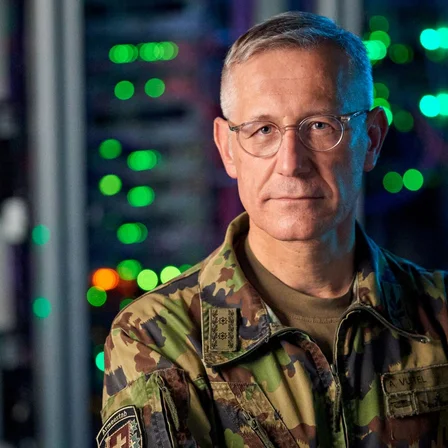
Foto von Alain Vuitel

How much cyber sovereignty does Switzerland need? If we are to lead our country into a secure future, it is essential that we resolve strategic issues such as these. SATW facilitates discussions of this nature and enlists outstanding minds to develop solutions for Switzerland as a nation. 

Major General Alain Vuitel, Project Manager, Armed Forces Cyber Command

Cybersecurity challenges for the Swiss government

Many of the technological developments of our age are closely connected to different aspects of cybersecurity. The SATW Cybersecurity Advisory Board has identified the key technological developments that are relevant from a cybersecurity perspective. It issues recommendations for decision-makers in government and administration on the action that needs to be taken now to equip Switzerland for the challenges of tomorrow.

To the Cybersecurity Map

Publications

Our society is more dependent on rare metals than ever before: mobile phones, flat screens, digital cameras, cars and wind turbines would hardly be conceivable in their current form and functionality without rare metals, as these materials have exceptional properties. Platinum, for example, is used in car catalytic converters, while tantalum is used in the production of aircraft turbines or microcapacitors in mobile phones. Indium is used in combination with tin as a transparent conductor in flat screens and lithium is a key element in rechargeable batteries.

The question of how the increasing global demand for these elements can be met in the medium to long term is the subject of controversial debate. It is evident that various factors influence supply: for example, deposits of rare metals that are worth mining are often limited to a few areas, resulting in politically and economically critical dependencies. In addition, rare metals are not usually mined on their own, but are produced as by-products in the extraction of other elements. The supply of rare metals is therefore not only controlled by the immediate demand for the specific element.

This is aggravated by the fact that rare metals are only beginning to be returned to the material cycle. There are many reasons for this: lithium, for example, is so cheap that recycling it is hardly worthwhile. Indium can only be recovered with great effort because it occurs in very low concentrations in individual electronic devices. The problem with tantalum, on the other hand, is that in pyrometallurgical recycling processes this element passes into the slag as a residue and is difficult to recover from it.

The specific examples in this publication show that the current handling of rare metals can lead to critical situations in the future. Approaches for a more sustainable handling of these important elements are therefore needed. This requires a better understanding of the relevant material cycles as well as targeted and coordinated measures that are institutionalised internationally. As a country with few raw materials, Switzerland also has a great interest in finding sustainable solutions in this area. As an important centre of research, it can make a concrete contribution to solving the problems that lie ahead.

Rare metals - Executive summary in German

Rare metals - Study in German

Métaux rares - Executive summary in French
Main authors:

Patrick A. Wäger and Daniel J. Lang

Co-authors:

Raimund Bleischwitz, Christian Hagelüken, Simon Meissner, Armin Reller, Dominic Wittmer

Review:

Xaver Edelmann, Hans Hänni, Eberhard Jochem, Ulrich W. Suter, Andreas Zuberbühler

Editors:

Felix Würsten

Cybersecurity Topical Plattform

How can Switzerland best prepare for cyber threats? This is where the SATW’s thematic platform comes into play. The platform advises the secretariat on matters relating to cybersecurity and the strategic direction of the priority programme. It regularly identifies new relevant topics and highlights specific areas for action. In this way, the thematic platform helps ensure that Switzerland is as well-equipped as possible to defend itself against cyber threats.

More