How can Switzerland prepare for an uncertain future? The Federal Chancellery has explored this question with numerous experts from the Federal Administration and the academic community. In the report ‘Perspectives for Switzerland 2040’, which the Federal Council took note of on 19 June 2026, it outlines possible futures for Switzerland in 2040 based on three scenarios. These range from economic stagnation to an economic upturn, a critical security situation to a stable one, a hesitant approach to climate protection to an active one, and a multipolar world order to a unipolar one. From this, the report identifies six areas for action – ranging from social cohesion and Switzerland’s position as a centre of technology and knowledge to security and defence.
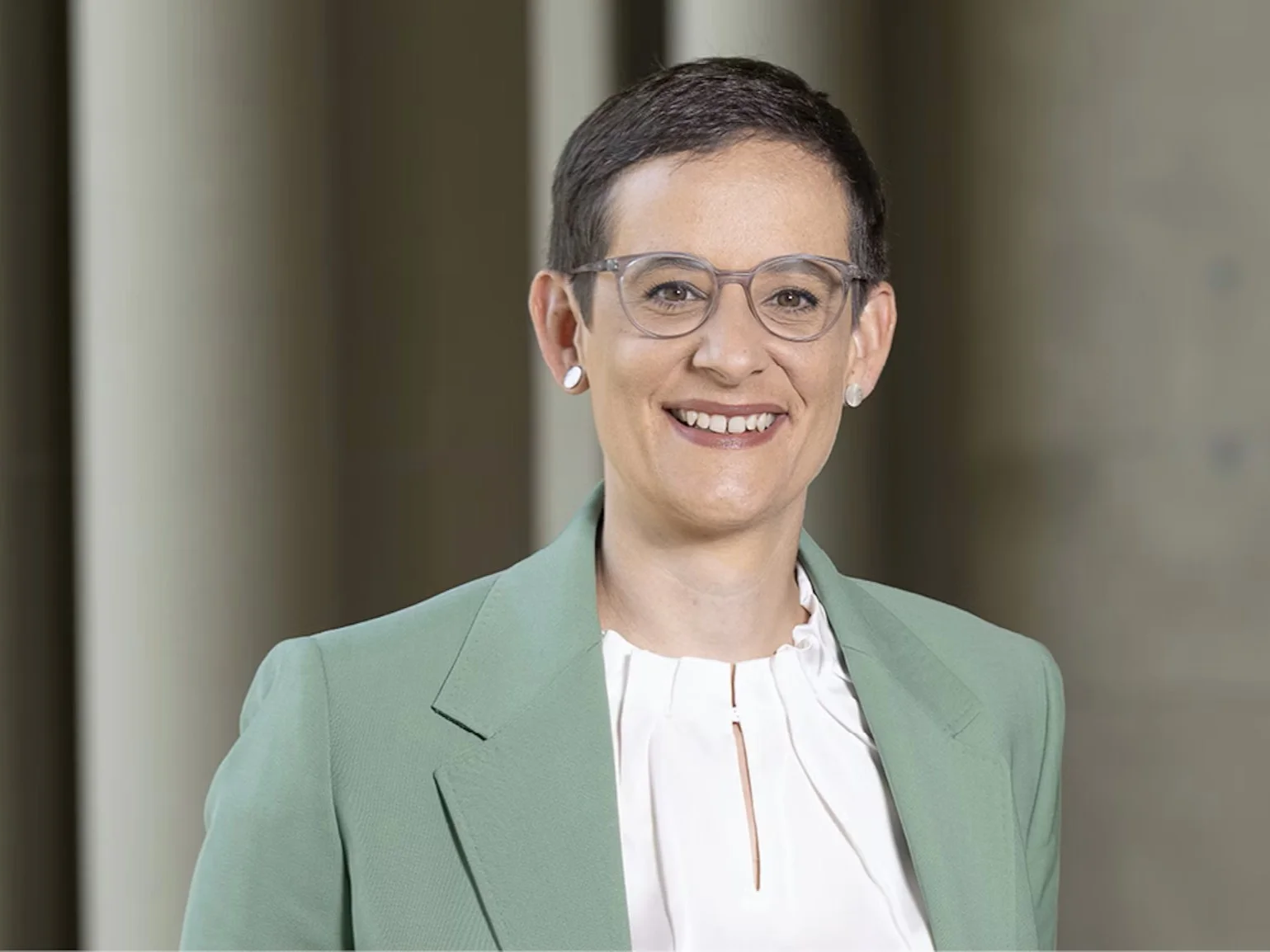
In an interview with the SATW, Vice-Chancellor Rachel Salzmann comments on the report and answers outstanding questions. The Vice-Chancellor has headed the Federal Council Division of the Federal Chancellery since 2024 and, in this role, is also responsible for the Confederation’s political planning.
What are the aims and objectives of ‘Perspectives Switzerland 2040’?
‘Perspectives Switzerland 2040’ takes a look at the Switzerland of tomorrow. The Federal Chancellery’s analysis of the situation and environment is produced every four years and looks ten to fifteen years ahead: what developments could shape Switzerland? What opportunities are opening up, and where are challenges emerging?
By looking to the future in this way, the report lays the foundations for forward-looking policy-making. In particular, it informs the Federal Council’s legislative planning. At the same time, as a publicly accessible report, it also provides other stakeholders from politics, business and society with a shared framework for long-term planning.
What methodology was used to produce the report?
The aim of ‘Perspectives Switzerland 2040’ is to identify potential long-term developments for Switzerland and to contribute to strengthening strategic planning. We therefore opted for the scenario-based approach; an established method of strategic foresight that is well suited to highlighting upcoming developments, opportunities and challenges. Essentially, this involves developing various visions of the future based on observations and assumptions. From the outset, we decided to conduct the process with an open-ended approach and deliberately refrained from outlining a reference scenario or ideal scenario. All scenarios contain both positive and negative elements and thus reflect the logic of the real world.
Based on an extensive literature review and a survey of around 60 experts from the federal administration and academia, we first identified numerous factors influencing Switzerland’s future. These were then distilled into the nine most influential key factors during a workshop. These key factors formed the basis for developing the scenario framework, comprising three global scenarios and their implications for Switzerland.
What are the key messages of the report?
It may sound trivial now, but for me the report makes it clear that the future is by no means set in stone. This is particularly true in today’s highly interconnected world, which is characterised by rapid and, in some cases, disruptive changes. This uncertainty presents a challenge, but it also creates scope for action and makes it possible to shape alternative visions of the future. With ‘Perspectives Switzerland 2040’, we aim to identify possible long-term developments for Switzerland and thereby contribute to strengthening strategic planning. Against this backdrop, the early identification of future developments is becoming increasingly important.
Is this a further development of the ‘Switzerland 2035’ report, or has a completely new approach with new themes been adopted?
There are various approaches to highlighting key developments, trends or future scenarios. It is important that we remain open to different approaches and also have the courage to try out other approaches. There is a certain degree of continuity between the ‘Switzerland 2035’ report, published in 2022, and the present ‘Perspectives Switzerland 2040’ report. Methodologically, however, a different approach was adopted for the two reports. The ‘Switzerland 2035’ report consists of topic-specific brief analyses by domestic and international think tanks on key issues that are likely to concern Switzerland in 2035. In the ‘Perspectives Switzerland 2040’ report, by contrast, scenarios have been developed. Both approaches strike me as valuable foundations for the Federal Council’s policy planning.
To what extent do the current geopolitical upheavals shape the scenarios outlined?
Geopolitical conditions constitute the first of the nine key factors identified. The scenarios are heavily influenced by this aspect, which is undoubtedly also due to the current global situation. Some of the surveys took place in the immediate run-up to major political events, including the war in Ukraine and trade policy challenges. These certainly shaped the discussions at the workshops, and I can well imagine that the scenarios would have had a different focus if the workshops had been held, for example, during the COVID-19 pandemic.
The scenarios outlined paint a rather bleak picture of the future. What is the strength of these scenarios?
I wouldn’t describe the visions of the future outlined as bleak, but rather as challenging. It also seems important to me to point out that the scenarios represent neither an idealised picture nor the most likely future. Each scenario contains elements that can be viewed both positively and negatively, thereby facilitating a critical examination. For me, the strength of the scenarios lies in the fact that they highlight a wide range of possible – including uncomfortable – developments. They thus provide a valuable basis for identifying challenges and opportunities at an early stage and addressing them proactively.
Please comment briefly on the six areas for action. Who does the report identify as having a duty to take responsibility for the individual areas for action?
The areas of action were derived from the range of scenarios. These will be of great relevance to Switzerland’s near and medium-term future and should be addressed appropriately.
They highlight key priorities: strengthening social cohesion; reinforcing Switzerland’s position as a centre of technology and knowledge, as well as its digital sovereignty; promoting economic prosperity through resilient structures, effectively tackling the challenges of climate change, further developing Switzerland’s international role and its relations with key partners, and strengthening security and defence capabilities in the face of new threats.
Your readership is likely to be particularly interested in the area of action ‘Switzerland as a centre of technology and knowledge’. Among other things, it highlights how important favourable framework conditions for education, research and innovation are, and that it is essential to maintain and further optimise these.
The report places the primary responsibility on the Confederation and the cantons, which should address these areas of action appropriately in their political planning and begin tackling them now. For some areas of action, however, responsibility also lies with the business community and the general public. I would like to note here, however, that the report does not set out any specific measures or priorities. This is the task of the Federal Council and Parliament. In its message on the 2027–2031 legislative programme, the Federal Council will submit specific guidelines, objectives and measures to Parliament. The areas for action form the basis for this message, which my team is currently drafting in collaboration with the departments.
In which areas does the report consider Switzerland’s technological development to be on track? And in which areas is Switzerland at risk of falling behind in technological development by 2040?
The report outlines three scenarios, none of which should be regarded as the most likely or ideal. In two of the scenarios, the report considers Switzerland to be on track, particularly in biotechnology and robotics, as it has the right conditions and framework in place to assume a leading global role in these fields. At the same time, these scenarios reveal significant dependencies when it comes to digital technologies and platforms. Switzerland – like other European countries – lags significantly behind in this respect and is dependent on companies based abroad. Although policymakers and the business community are aware of this in the scenarios, they are unable to identify convincing alternatives. This also highlights the growing importance of measures to strengthen digital sovereignty.
The report identifies biotechnology and robotics as two technologies in which Switzerland can assume a leading role. What is the basis for this statement?
All the statements in the report are based on assessments by experts from the Federal Administration and the academic community, which have been verified through literature reviews. Your question refers directly to the ‘dominant power’ scenario. In this scenario, technological development is advancing rapidly worldwide, and Switzerland can assume a leading role in the fields of biotechnology and robotics and make a significant contribution to the development of new technologies.
One of the six areas of action in the report concerns climate and ecosystems. The SATW’sTechnology Outlook highlights numerous technologies that can help reduce greenhouse gas emissions. What role do these play in this area of action?
Within the ‘Climate and Ecosystems’ area of action itself, the focus is less on individual technologies and more on reducing greenhouse gas emissions to achieve the 2-degree target, as well as on adaptation measures to address the consequences of climate change.
However, the scenarios reveal a clear link between technological development and global average temperatures. New technologies for reducing emissions therefore play an important role. Our scenarios also show that geopolitical conditions have a major influence on the development and uptake of such technologies.
Rachel Salzmann has been Vice-Chancellor since 1 July 2024 and heads the Federal Council division of the Federal Chancellery. Together with the Federal Chancellor and the Federal Council Spokesperson, she is responsible for the preparation, conduct and follow-up of Federal Council meetings. She heads eight organisational units with around 150 staff, including those responsible for language services, official publications and legislative acts, and is responsible for the Confederation’s political planning. Salzmann is from Naters (VS). She studied history and media and communication studies at the University of Bern and completed an Executive MBA with a specialisation in public management at Bern University of Applied Sciences. From 2012 to 2018, she worked at the Federal Department of the Environment, Transport, Energy and Communications (UVEK), spending the last four years as a personal assistant to Federal Councillor Doris Leuthard. She then served as Head of Public and Regulatory Affairs at Credit Suisse Energy Infrastructure Partners AG and, most recently, as Head of the CEO’s Staff at CSS Health Insurance.
| Role | Title + Name |
|---|---|
| Text by | Claudia Schärer |
| Expertise | Rachel Salzmann |