
The ‘Dialogues urbains: durabilité et médiation’ project is a prime example of how technical expertise and educational outreach can be combined. SATW provides targeted support for such initiatives through its specialist funding programme, which strengthens the next generation of experts and promotes the transfer of knowledge between universities and society.
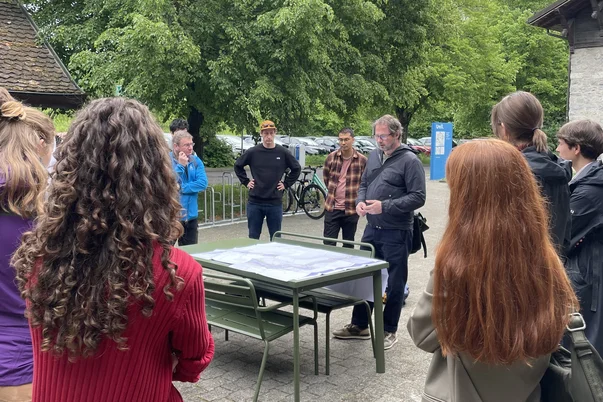
Gregory Bussien from Atelier ADR is presenting the plans for the site to the students and their accompanying adults on site.
The project was initiated by the Ville en tête association as part of ENAC Week. This is the annual event organised by the School of Architecture, Civil and Environmental Engineering (ENAC) at EPFL. Every spring, it brings together students of architecture, environmental sciences and civil engineering to work on specific interdisciplinary projects.
Thanks to a collaboration with the Central Environmental Laboratory (CEL), EPFL’s Science Communication unit and SATW’s specialist funding programme, the week-long workshop was able to take place for the first time in 2025. In partnership with the Vaud University of Teacher Education (PH Vaud), the week was also opened up to students of education. Their shared aim: to develop and deliver educational workshops on the topic of sustainable cities, aimed at secondary school classes.
Around twenty students took part. In 2025, the project welcomed four classes, and in 2026 it was continued on the same scale. It is planned to continue the project in the coming years.
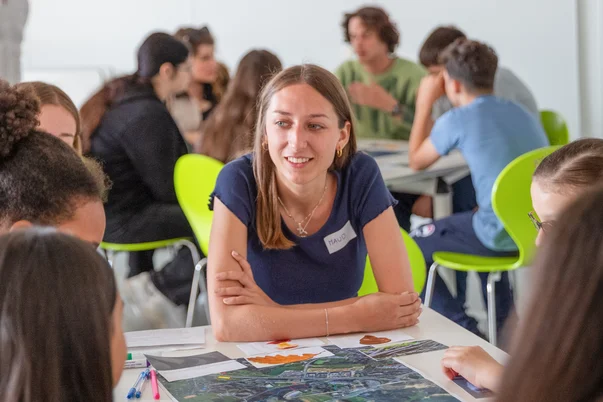
Working in mixed groups, the students use maps and aerial photographs to develop their proposals for the area.
Through its contribution, the SATW is facilitating an exchange that rarely takes place in this form. EPFL students not only collaborate with experts from other areas of the built environment; they also work with trainee teachers who are not very familiar with the technical topics covered. This combination of participants is rarely encountered in their respective degree programmes, yet it reflects everyday professional practice in both fields.
The workshop thus imparts key skills for future professional practice:
Conversely, students at the Vaud University of Teacher Education (PH Vaud) are introduced to topics relating to built environment. They also try out methods of creative co-design within a transdisciplinary team. Although built environment does not appear as a separate subject in the curriculum, its themes are omnipresent in the Plan d’Études Romand. The workshop thus creates a practical learning opportunity. At the same time, it provides important impetus for education for sustainable development.
The students work in mixed groups for a week. They pool their diverse specialist knowledge to examine urban sustainability in all its dimensions: landscape, biodiversity, water management, the design of public spaces and social inclusion. The case study focuses on the Chamberonne, a watercourse in Lausanne that is currently being revitalised.
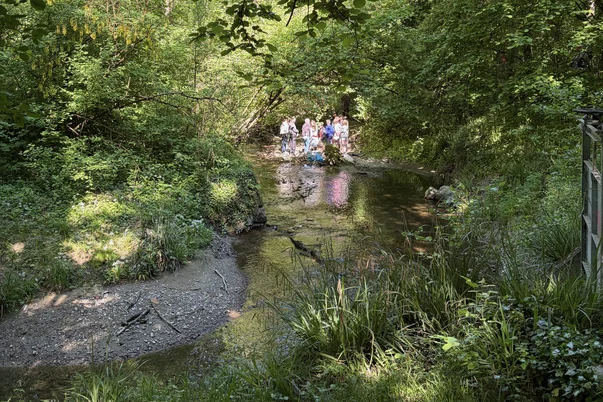
Once there, the students explore the course of the Chamberonne stream and its surroundings.
The programme includes:
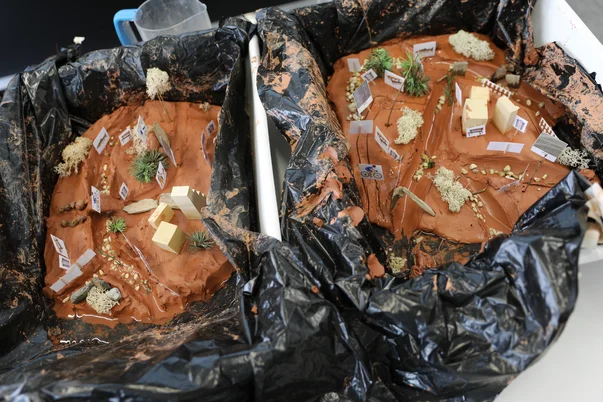
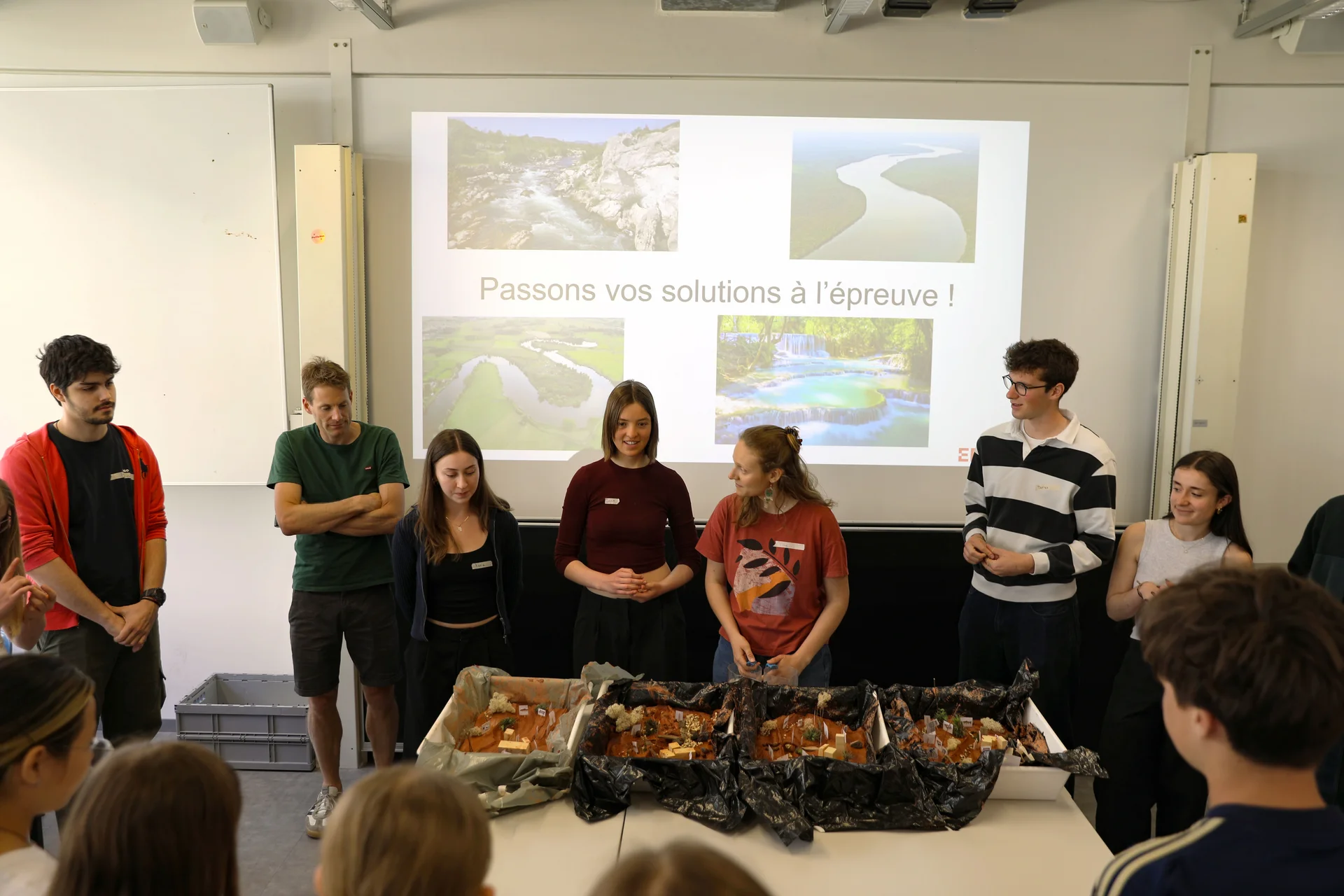
The students create three-dimensional models of the landscape to bring their ideas to life for secondary school classes.
To round things off, four school classes will test the workshops developed by the students. This is a real test for everyone involved and their first hands-on experience of educational outreach work.
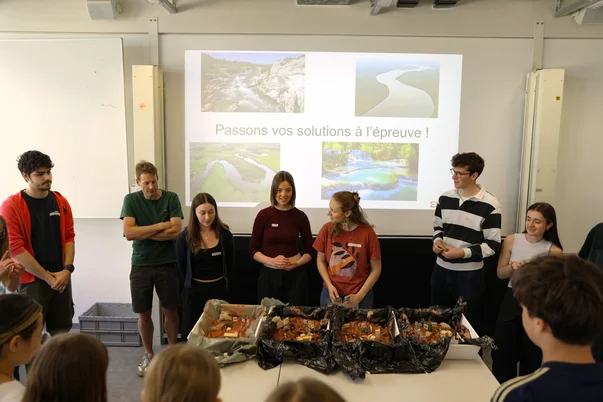
The students present their models to secondary school classes and put their own solutions to the test.
By supporting such projects, the SATW promotes professional exchange between disciplines. In doing so, it strengthens both technological and societal development in Switzerland. The project was submitted by the SIA – Swiss Society of Engineers and Architects – and the BSLA – Swiss Federation of Landscape Architects. In the case of ‘Ville en tête’, this is particularly evident in the areas of sustainable urban development and outreach work with young people.